20 retailer loyalty ideas beyond the slab scheme
The default Indian retailer scheme is a purchase slab: buy more, get a percentage. It is easy to explain, easy to administer and almost entirely undifferentiated — every competitor offers the same thing, so it functions as a permanent discount rather than a loyalty mechanism. These are twenty mechanics that do something a slab cannot.
Key takeaways
- A slab scheme rewards what the retailer already intended to buy. Everything interesting happens when you reward something else.
- The retailer's scarcest resources are shelf space, working capital and counter attention — design against those, not against price.
- Non-monetary benefits (credit terms, returns handling, delivery reliability) routinely outrank cash in retailer surveys.
- Reserve part of the pool for reactivation; a dormant counter is cheaper to win back than a new one is to acquire.
Ideas that buy shelf space
Range-width bonus
Reward carrying eight of ten focus SKUs, verified by scan, rather than rewarding volume on the two that already sell. This is the single most useful mechanic for new launches and slow-moving but strategic SKUs.
Planogram compliance rewards
Photo-verified display position, paid monthly. Works where the shopper chooses at the shelf; largely wasted where an electrician or plumber decided before the customer arrived.
First-shelf launch bonus
A time-boxed bonus for stocking a new SKU within thirty days of launch. Launches die at the counter, not in the market.
Category-anchor incentives
Reward the retailer for the categories where you are weakest rather than strongest, so the pool moves the business rather than following it.
Ideas that ease working capital
Early-payment rewards
Points or rebate for settling within terms. Cheaper than the interest you are implicitly financing, and it improves your own cash cycle.
Credit-limit unlocks by tier
A higher limit earned through consistent performance is often valued above cash, particularly by growing counters.
Returns and damage handling as a benefit
Fast, no-argument returns are consistently among the top things Indian retailers say they want. Make it a tier privilege and it becomes a loyalty mechanic rather than a cost line.
Delivery reliability commitments
Guaranteed next-day delivery for higher tiers. In categories where a counter loses a sale by not having stock, this is worth more than a discount.
Insurance on stock or shop
A small group policy that costs a few hundred rupees a year and is remembered for a decade.
Ideas that generate data you do not have
Scan-in, scan-out secondary tracking
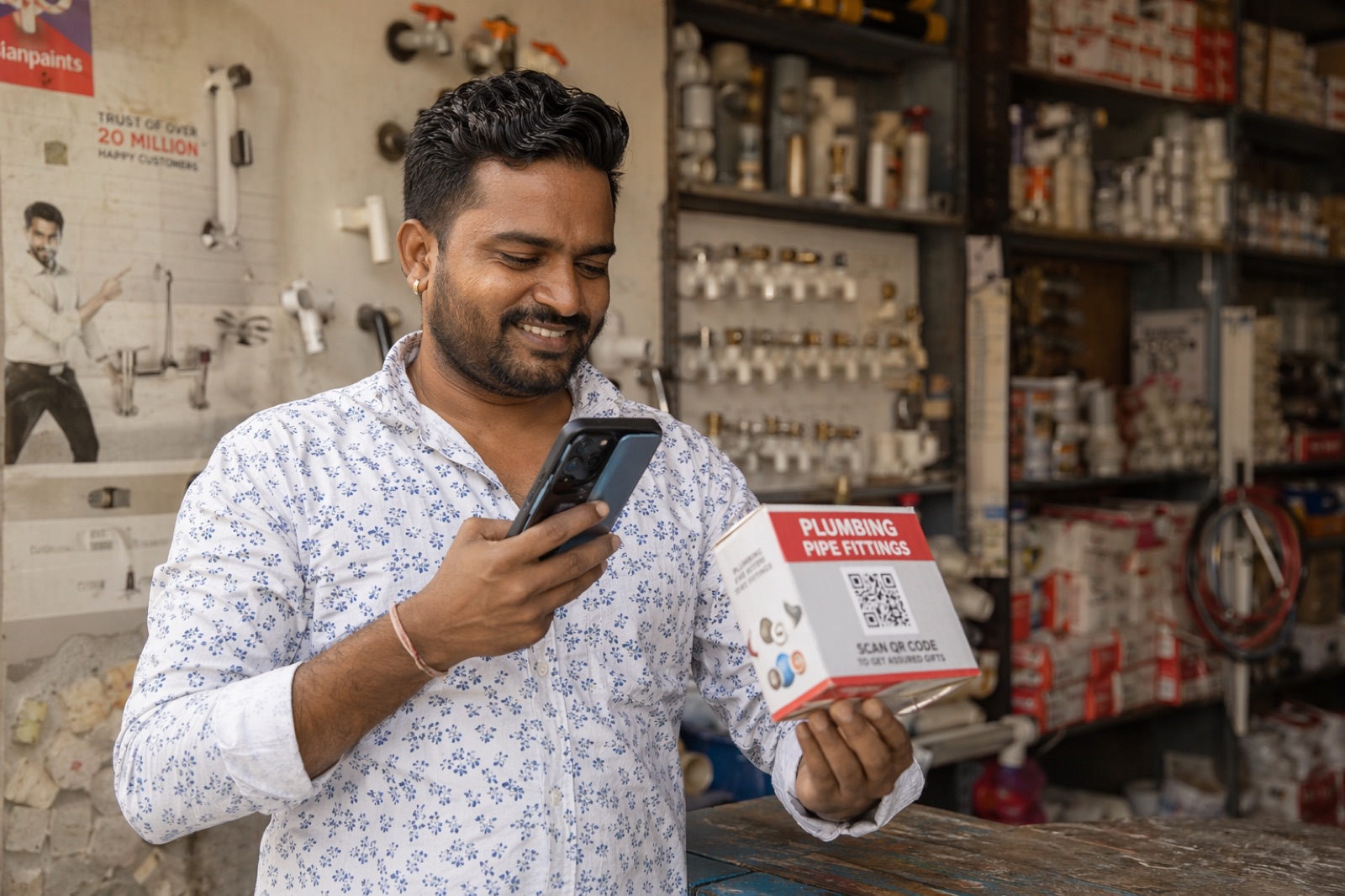
The counter scans cartons received and sold. You get real secondary-sales visibility without distributor ERP integration, and he gets rewarded for a few seconds of effort.
Influencer enrolment bounty
Pay the counter for every electrician or plumber he enrols who then completes ten scans. Turns your biggest potential obstacle into your cheapest acquisition channel.
Competitor-share surveys
Two questions a month, answered for a small reward. Imperfect data, but directionally useful and far cheaper than a research panel.
Stock-out reporting
Reward the counter for reporting when he is out of a focus SKU. You learn about distribution failures in days rather than quarters.
Ideas that build the relationship
Family-facing rewards
School fees support, a household gift at Diwali, a health check-up for the family. Retailers are family businesses; the reward that reaches the family outlasts the one that reaches the till.
Business-skills support
GST filing help, digital-payments setup, basic inventory training. Genuinely useful, rarely offered, and it positions the brand as a partner rather than a supplier.
Anniversary and milestone recognition
Twenty years of stocking your brand deserves more than a calendar. A plaque, a mention at a meet, a visit from someone senior.
Tier privileges that are real
Priority allocation during shortages, first access to new SKUs, a named person who answers the phone. Cosmetic tiers are noticed and resented.
Annual meets with substance
Product roadmap, category trends, an honest Q&A. Retailers attend for information they cannot get elsewhere, and for the standing that attending confers.
Ideas for counters you are losing
Reactivation offers with a deadline
A dormant counter responds to a specific, time-boxed reason to place one order — not to a general appeal. Budget 3–5% of the pool for this; it is consistently the cheapest volume you will buy.
Win-back diagnostics
Before spending anything, call fifty dormant counters and ask why. In most Indian channels the answer is a service failure — a delivery, a return, a rude field rep — not price, and no incentive will fix a service problem.
Choosing between them
| If your problem is | Use | Not |
|---|---|---|
| New SKU not reaching shelves | Range-width and launch bonuses | Higher slabs |
| No visibility below distributor | Scan-based secondary capture | More reports from distributors |
| Counters stocking competitors too | Range-width plus tier privileges | Exclusivity demands |
| Influencer program underperforming | Enrolment bounty for counters | More influencer advertising |
| Retailers churning | Service fixes, then reactivation | Discounts |
| Working capital friction | Early-payment and credit-tier rewards | Extended free credit |
The complete framework sits in the retailer loyalty guide, fifty worked variants in 50 retailer scheme examples, and what retailers themselves say they want in what retailers want from brands.
Frequently asked questions
What is wrong with a standard retailer slab scheme?
Nothing, except that it mostly rewards purchases the retailer had already decided to make, and every competitor offers the same structure. That makes it function as a permanent discount rather than a loyalty mechanism. Slabs work best as a base layer with two or three differentiated mechanics on top.
What do Indian retailers value most besides money?
Credit terms, fast and argument-free returns, reliable delivery, priority allocation during shortages and being treated with respect by the field team. These consistently rank at or above cash in retailer surveys, and unlike a discount they are difficult for a competitor to match instantly.
How do you get secondary sales data from retailers who buy through distributors?
Reward scanning. The counter scans cartons received and sold and earns for it, which gives you real throughput visibility without needing ERP integration at every distributor. It is typically cheaper than a slab scheme and produces data a slab scheme never generates.
How do you get retailers to stock a new SKU?
A time-boxed first-shelf launch bonus for stocking within thirty days, combined with a range-width bonus that rewards carrying a defined set of focus SKUs rather than volume on the two that already sell. Launches die at the counter far more often than in the market.
Should retailers be rewarded for enrolling electricians and plumbers?
Yes — it is one of the highest-return mechanics available. Paying a counter for every influencer he enrols who then completes ten scans converts the person most able to obstruct your influencer program into your cheapest acquisition channel, and it removes the sense that the brand is going around him.
How much of the budget should go to reactivating dormant retailers?
Around 3–5% of the pool. Dormant counters are consistently the cheapest incremental volume available, but only after you have called fifty of them and asked why they stopped. In most Indian channels the answer is a service failure rather than price, and no incentive repairs a service problem.
Do family-oriented rewards actually work for retailers?
They work unusually well, because Indian retail counters are family businesses and the decision to keep stocking a brand is a household decision as much as a commercial one. School-fee support, a Diwali gift addressed to the household or a family health check-up is remembered long after an equivalent cash rebate is forgotten.