B2B loyalty programs in India
Consumer loyalty theory transfers to B2B badly. The member is a business rather than a person, the reward is a taxable benefit rather than a perk, the decision is economic rather than emotional, and — uniquely in India — a large share of the people you most want to influence do not appear anywhere in your records.
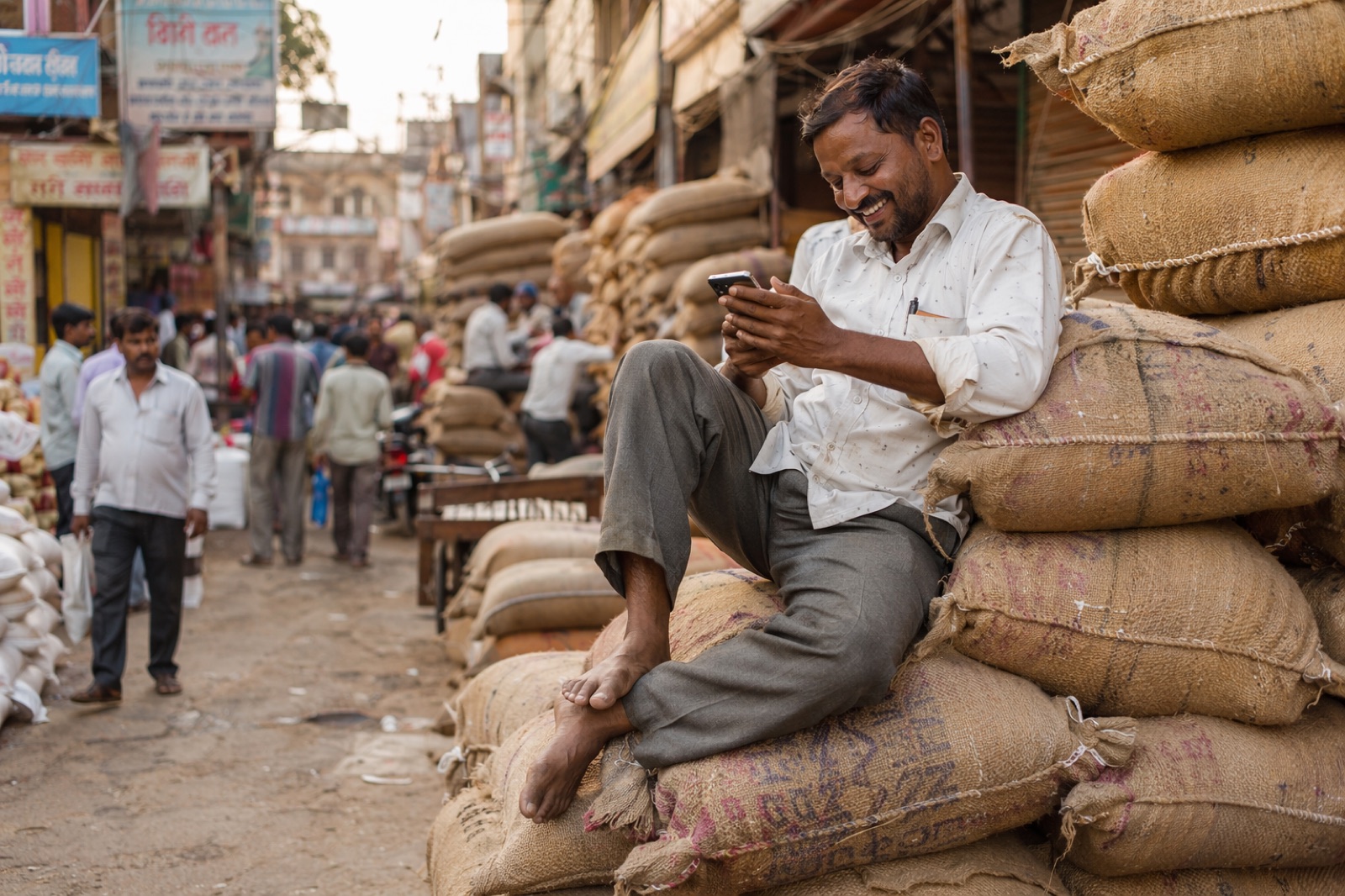
B2B loyalty programs reward businesses and trade professionals — distributors, dealers, retailers, contractors and tradesmen — for purchase and specification behaviour. They differ from consumer loyalty in four ways: the member is an economic buyer rather than an emotional one, rewards are taxable benefits under Section 194R, the decision maker may differ from the account holder, and in Indian channels many members are invisible to the brand's own ERP.
Four structural differences
The buyer is economic, not emotional
A consumer program can trade on brand affinity and status. A dealer is running a business with thin margins, and he will calculate. This is not cynicism — it means your program has to survive arithmetic, and vague emotional appeals will not carry it.
Rewards are taxable benefits
Section 194R applies: any benefit provided in the course of business attracts 10% TDS once cumulative value crosses ₹20,000 per PAN in a financial year, aggregated across every scheme you run. Consumer loyalty points generally do not carry this treatment, which is why consumer platforms rarely handle it natively.
The decider is not always the account
A firm buys, but a person specifies. In building materials the electrician chooses the wire and the counter bills it; rewarding only the account misses the person who made the decision — see channel loyalty versus retailer loyalty.
Many members are invisible
Sub-dealers buy through distributors and never appear in your invoices; tradesmen appear nowhere at all. Enrolment has to create the record rather than draw on one — see sub-dealer loyalty programs.
What actually drives B2B loyalty
| Driver | Weight | Why |
|---|---|---|
| Reliable supply and allocation | High | A stock-out costs a sale that cannot be recovered |
| Predictable, disputed-free settlement | High | Cash-flow planning matters more than headline rate |
| Credit terms and limits | High | Working capital is the constraint in most trade businesses |
| Returns and damage handling | High | Consistently under-delivered across the industry |
| Margin and scheme rate | Medium | Necessary but rarely decisive on its own |
| Field relationship | Medium-high | A representative who follows through is repeatedly cited |
| Brand pull | Medium | Matters most where the end customer asks for the brand |
| Training and certification | Medium | High impact in influencer tiers specifically |
Program design implications
- Publish the rules and honour them. B2B members compare notes, calculate, and remember. Opacity is read as an intention to underpay.
- Settle mechanically and on schedule. Predictability outranks generosity in almost every dealer survey.
- Design for the invisible tiers. If sub-dealers and tradesmen are outside your ERP, scan-based mechanics are the practical route to reaching them.
- Handle tax natively. Aggregate per PAN across schemes, show deductions in the member's own statement, issue certificates.
- Give non-monetary benefits real weight, because they differentiate where rate cannot.
- Expect multi-homing. Your members work with your competitors too. Compete for share rather than demanding exclusivity you will not get.
The India-specific layer
Four things make Indian B2B loyalty its own discipline rather than a translation of Western practice:
- Language. Eight or more Indian languages across the member journey, not just a landing page.
- WhatsApp as the interface. Enrolment, balance, redemption and support all work there; a native app is an upgrade for engaged members, not the front door.
- Instant UPI at small values. ₹5 payouts, thousands per hour, with failure handling — a payment-rail problem more than a loyalty problem.
- Counterfeit exposure. In wires, plumbing, lubricants and auto parts, verification and loyalty belong in the same scan.
What good looks like
| Metric | Healthy range |
|---|---|
| Enrolment to first transaction | > 70% within 14 days |
| Monthly active share of enrolled | 45–65% |
| Redemption rate | > 80% of accrued value |
| First-attempt payout success | > 97% |
| Cohort retention at 12 months | > 55% |
| Revenue share from engaged members | Rising quarter on quarter vs control |
Definitions and calculation methods are in loyalty program KPIs, and the platform question in best channel loyalty platforms in India.
Frequently asked questions
What is a B2B loyalty program?
A program that rewards businesses and trade professionals — distributors, dealers, retailers, contractors and tradesmen — for purchase and specification behaviour, rather than rewarding end consumers. In India it typically combines invoice-based earning for accounts with scan-based earning for individual trade influencers.
How is B2B loyalty different from consumer loyalty?
The member is an economic buyer who will calculate rather than an emotional one, rewards are taxable benefits under Section 194R rather than perks, the person who decides may differ from the account that buys, and many Indian channel members are invisible in the brand's own ERP so enrolment has to create the record.
What drives loyalty in B2B channels?
Reliable supply and allocation, predictable dispute-free settlement, credit terms, and returns handling rank highest — generally above headline margin. A field representative who follows through and, in influencer tiers, training and certification also carry significant weight.
Do B2B loyalty rewards attract tax in India?
Yes. Section 194R applies 10% TDS to benefits provided in the course of business once cumulative value crosses ₹20,000 per PAN in a financial year, aggregated across every scheme rather than per scheme. Consumer loyalty points generally do not carry this treatment, which is why consumer platforms rarely handle it natively.
Should B2B loyalty programs demand exclusivity?
No. Channel members work with competing brands simultaneously and always will. Exclusivity is agreed verbally and ignored in practice, and asking for it signals a misunderstanding of the trade. Compete for share of purchase or specification instead.
What makes Indian B2B loyalty different from Western practice?
Support across eight or more Indian languages, WhatsApp rather than an app as the primary interface, instant UPI payouts at values as small as ₹5 with proper failure handling, and counterfeit exposure in categories like wires, plumbing and lubricants that puts verification and reward in the same scan.