How to create a QR code loyalty program
The software is the easy part. What actually determines whether a QR loyalty program works is a sequence of decisions made in the right order, several of which belong to your production team rather than your marketing team. This is that sequence.
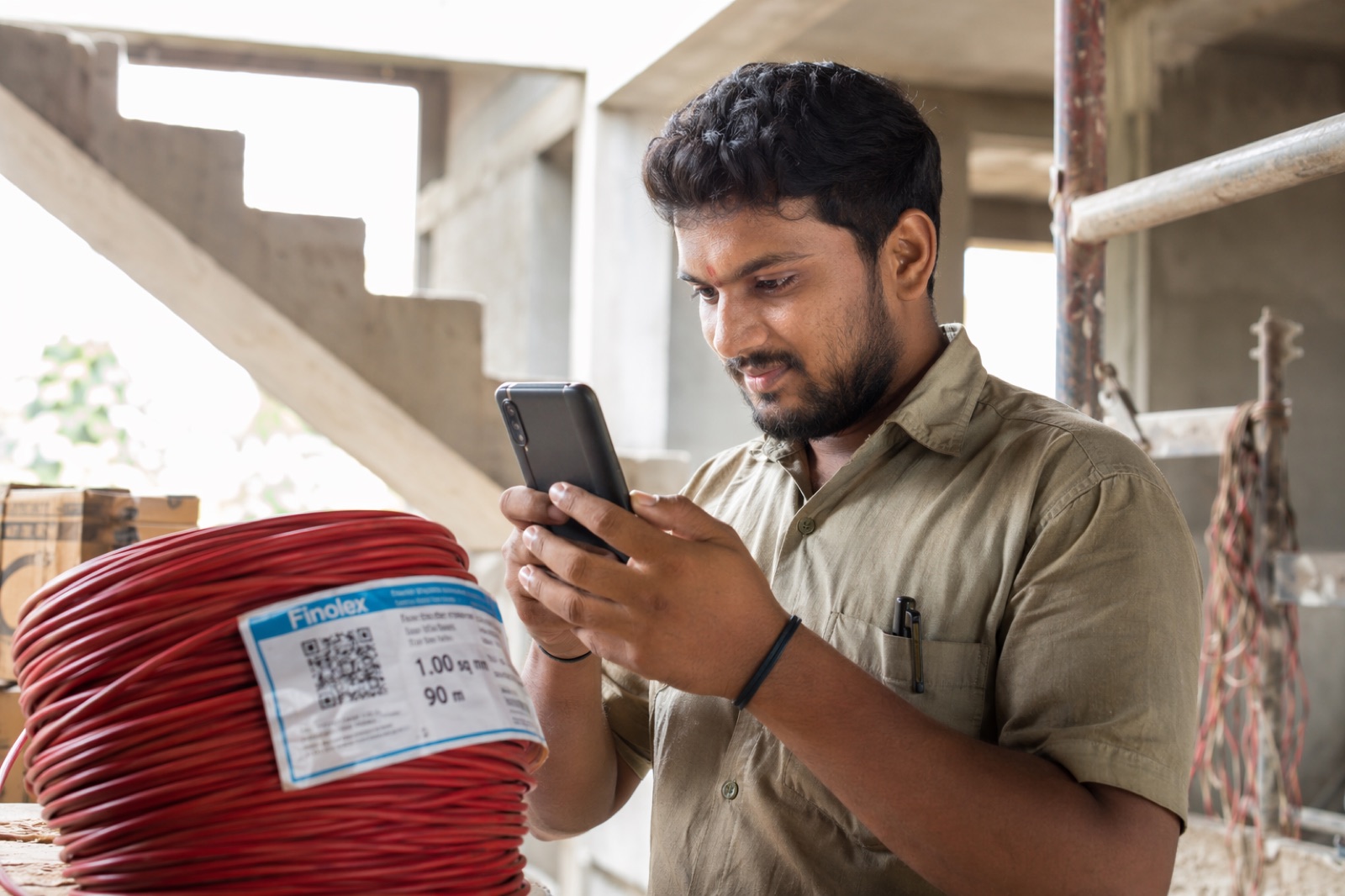
To create a QR code loyalty program: define the business outcome, choose which SKUs carry codes, decide code placement, generate non-sequential serialised codes, solve variable-data printing at line speed, set reward rates from margin upward, build WhatsApp enrolment and tested UPI payout rails, add tunable fraud controls, and pilot in two districts before scaling. Budget roughly 100 days to a validated pilot.
Key takeaways
- Decide code placement before reward rates — placement determines who can claim, which determines what the rate must be.
- Bring production into the room in week one. Variable-data printing at line speed is the long pole, not the software.
- Prove the payout rail before printing a single code. Members forgive most things except money that does not arrive.
- Gate expansion on payout reliability, not scan volume.
Step 1 — Define exactly one outcome
Four common goals, each producing a different program. Trying to serve all four at once produces one that serves none:
- Win specification share → reward the whole-job decision with completion bonuses, not per-item rates.
- Push a premium or new SKU → heavy, time-boxed multipliers plus an introduction bonus.
- Fight counterfeits → verification-first, where the reward exists to make scanning habitual.
- Build a member database → optimise for enrolment breadth and accept a lower per-scan rate.
Step 2 — Choose the SKUs
Start where the member's discretion is highest and quality is least visible to the end customer. In electricals that is house wire, cable, MCBs and conduit; in plumbing it is pipe, fittings and solvent cement. Leave the long tail for year two — the marginal enrolment gain is small and the packing-line complexity is not.
Step 3 — Decide placement before rates
Covered in detail in in-pack versus on-pack QR codes. The short version: if the code is visible before the pack is opened, expect a meaningful share of your reward pool to reach whoever breaks bulk rather than the person you intended.
Step 4 — Generate codes properly
Non-negotiables, covered fully in unique QR codes and serialisation:
- A large sparse keyspace, so valid codes are a vanishingly small fraction of possible codes.
- A check digit, so guesses fail arithmetically before they reach your database.
- No sequence. Incrementing codes are the single most exploited weakness in Indian QR programs.
- Rate limiting on validation attempts per device, so the keyspace cannot be probed.
Step 5 — Solve the printing
Get production and packaging into the evaluation, and make the vendor answer their questions rather than yours. What will ambush you otherwise:
- Can the line apply variable data at full speed, or does it slow the line?
- Does the code survive coiling, shrink-wrapping, solvent exposure and transit?
- What happens when a code prints badly — is the reject reconciled against the issued list?
- How do codes generated, codes printed and codes shipped reconcile at the end of a batch?
Step 6 — Set rates from margin, not from competitors
Work bottom-up from a real bill of materials and check three numbers before anything is printed: monthly earnings for an active member (₹1,200–₹4,000 depending on trade), pool as a share of channel revenue (0.6–2.0%), and what share of scanned volume is genuinely incremental. If you cannot estimate the third, you are measuring activity rather than return.
Step 7 — Build the rails
Enrolment on WhatsApp, ninety seconds, mobile number only — PAN and bank details come at first redemption. Payouts tested from ₹1 to ₹10,000 including failed-VPA retries, name-mismatch rejections and bank downtime, with a ledger the member can inspect himself. Detail in UPI reward payouts.
Step 8 — Fraud controls you can tune yourself
Geo-velocity, dealer-pattern clustering, per-member daily caps, and escalation to review rather than hard blocking. A black-box fraud engine you cannot tune will either bleed money or block honest members, and you will not know which. See QR program fraud prevention.
Step 9 — Pilot, with gates
| Gate | Threshold |
|---|---|
| Enrolment to first scan | > 70% within 14 days |
| First-attempt payout success | > 97% |
| Support tickets | Falling for a full month |
| Dealer sentiment | Neutral or better |
Two districts, six weeks, roughly twenty counters. Do not expand until all four clear. Pilot design is in loyalty program pilot design, and the full 90-day plan in how to launch a loyalty program.
Frequently asked questions
How do I create a QR code loyalty program?
Define one business outcome, choose which SKUs carry codes, decide placement, generate non-sequential serialised codes, solve variable-data printing at line speed, set reward rates from margin upward, build WhatsApp enrolment and tested UPI payouts, add tunable fraud controls, and pilot two districts before scaling.
How long does it take to launch a QR code program?
About 100 days to a validated two-district pilot and four to six months to a confident state rollout. Platform configuration takes days; the long poles are serialisation on the packing line, dealer alignment and a pilot long enough for retention patterns to appear.
What is the first decision in a QR program?
Where the code physically sits on the pack. Placement determines who can claim the reward, which determines what the reward rate has to be, which determines the budget. Brands that set rates first and later discover counter staff can reach the codes end up funding the wrong tier.
Do I need to serialise every SKU?
No, and you should not in year one. Start with the items your target member physically handles and that signal brand loyalty, typically the top twenty by volume plus any strategic SKU. Adding the long tail multiplies packing-line complexity for a small marginal gain.
What reward rate should a QR program pay?
It depends on trade and unit value — roughly ₹2–10 per fitting, ₹15–60 per wire coil, ₹10–30 per cement bag or pipe. The check that matters is whether an active member earns ₹1,200–₹4,000 a month; below that they ignore the scheme, far above it usually indicates fraud rather than engagement.
Should the pilot measure scan volume?
No. Gate expansion on enrolment-to-first-scan conversion above 70% within fourteen days and first-attempt payout success above 97%, plus falling support tickets and neutral-or-better dealer sentiment. Scan volume at pilot scale tells you very little about whether the program will survive.