What is a QR code program?
Almost every brand has printed a QR code on a pack at some point. Very few are running a QR code program, and the difference is not cosmetic — it is the difference between a code that opens a website and a code that knows which unit it is, who scanned it, where, and whether that scan should be paid for.
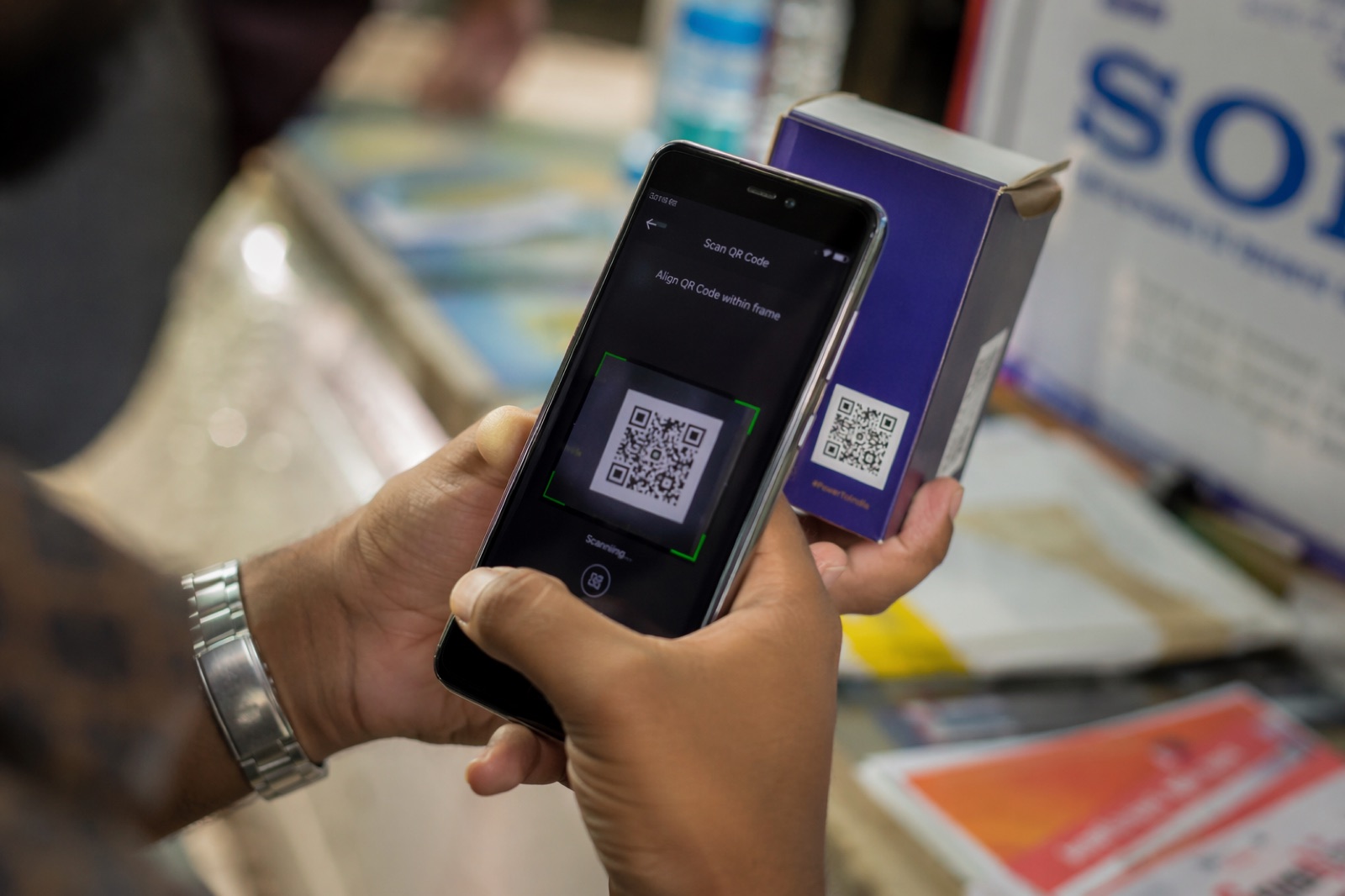
A QR code program is a brand-run system in which every product unit carries a unique, serialised QR code that links that physical item to a digital record. Unlike a marketing QR that sends everyone to the same page, each code is different, can be scanned only once for reward, and lets the brand reward the scanner, verify the product is genuine, register a warranty, and see where its stock actually went.
Unique codes versus marketing codes
This is the distinction that decides everything downstream. A marketing QR is one code printed identically on a million packs — it is a shortened URL in visual form. A program QR is a million different codes, each one issued, tracked and retired individually.
| Marketing QR | QR code program | |
|---|---|---|
| Codes printed | One, repeated on every pack | One unique code per unit |
| Printing | Static artwork | Variable-data printing at line speed |
| What a scan tells you | Someone scanned something | Which unit, scanned by whom, where, when |
| Can it be rewarded? | No — infinitely reusable | Yes — single-use, validated |
| Can it prove authenticity? | No | Yes — code must exist in your database |
| Cost per unit | Effectively zero | ₹0.15–₹0.80 depending on carrier |
Almost every disappointing QR initiative in Indian FMCG and building materials is a marketing QR being asked to do a program QR's job. If the code cannot be validated as unique and unused, you cannot pay against it, and if you cannot pay against it, nobody in the trade will scan it twice.
The five things a QR code program is used for
Rewarding the person who scans
The dominant use in Indian trade. An electrician scans a wire coil, a plumber scans a fitting, a retailer scans a carton, and money reaches them within seconds. Covered in QR code loyalty programs.
Proving the product is genuine
The code exists in your database or it does not. That single fact is the cheapest anti-counterfeit control available, and it works because a counterfeiter can copy artwork but cannot register codes in your system. See anti-counterfeit.
Registering a warranty at the moment of installation
The only reliable point at which a durable-goods brand learns who owns its product. Registration typically rises from 10–25% by posted card to 60–85% by scan.
Seeing where stock actually goes
Every scan is a geolocated data point. Aggregate them and you have secondary-sales visibility that no distributor report will give you — see secondary sales tracking.
Engaging the end consumer
Scan-and-win, recipe content, authenticity reassurance, service booking. Lower value per scan than trade programs, but far higher volume.
How a QR code program actually works
- Codes are generated from a large sparse keyspace with a check digit, so codes cannot be guessed by incrementing a number.
- Codes are printed at packing-line speed using variable-data printing, either directly on the pack, on a label, under a cap or inside the primary pack.
- The code is scanned by a phone camera. No app should be required to begin — in India the first scan almost always resolves into WhatsApp.
- The platform validates that the code exists, has not been claimed, and that the scan is plausible in time and place.
- An action fires — reward credited, authenticity confirmed, warranty registered, or all three in one screen.
- The scan is recorded against the member, the SKU, the batch and the location, and becomes data.
Steps one and two are where programs are actually won or lost, and they are factory problems rather than software problems. If your printer cannot apply variable data at line speed, nothing downstream matters.
Where the code physically goes
Placement determines who can claim the reward, which is a commercial decision disguised as a packaging one.
| Placement | Who realistically scans it | Use when |
|---|---|---|
| Outer carton, printed on label | Distributor, retailer, counter staff | You intend to reward the trade counter |
| Inside the outer carton | Whoever breaks bulk | Retailer-tier programs |
| Inside the primary pack or under the cap | The person who uses the product | Influencer and installer programs |
| On the product itself | Unavoidably the end user | Highest integrity; survives repacking |
What a QR code program costs
| Line | Typical cost | Note |
|---|---|---|
| Code generation and platform | ₹30,000–₹3,00,000 / month | By monthly active users and modules |
| Printing — direct variable data | ₹0.15–₹0.30 per unit | Cheapest at volume; needs line capability |
| Printing — applied label | ₹0.20–₹0.80 per unit | Flexible, retrofittable |
| Scratch or concealed layer | ₹0.40–₹1.20 per unit | Where the code must be hidden until opened |
| Reward pool | 0.6–2.0% of channel revenue | The largest line by far |
| Field activation | Varies | Consistently underestimated |
Note the proportions. The printing everyone argues about is a rounding error next to the reward pool. Model your own numbers in the cost calculator and the QR cost estimator.
What makes them fail
- The code is reachable before sale, so counter staff claim rewards intended for tradesmen.
- Codes are sequential, so they can be guessed at scale.
- Scanning requires an app install, which removes roughly half your potential members before they start.
- There is no offline path, so scans in basements and warehouses are silently lost.
- Payout is slow, which at ₹5 a scan is fatal — the arithmetic of bothering collapses.
- Nobody owns the packing-line work, and the launch slips a quarter.
Is a QR code program right for you?
It works when the product is packaged, the buyer is not the decider, and the decider can be reached. It works less well for unpackaged bulk commodities, for products bought once in a decade, and where the person you want to influence never physically handles the pack. If your influencer never touches the packaging, no code placement will reach him and you should be looking at invoice-based mechanics instead.
Frequently asked questions
What is a QR code program?
A QR code program is a brand-run system in which every product unit carries a unique, serialised QR code linking that physical item to a digital record. Each code is different and single-use, which lets the brand reward the person who scans it, verify the product is genuine, register a warranty and see where stock actually went.
What is the difference between a QR code program and a normal QR code?
A normal marketing QR is one code repeated on every pack — effectively a shortened URL. A QR code program prints a unique code on every unit using variable-data printing, so each scan identifies a specific item and can be validated as unused. Only unique codes can be rewarded or used to prove authenticity.
How much does a QR code program cost?
Platform fees typically run ₹30,000 to ₹3 lakh a month by monthly active users, printing costs ₹0.15 to ₹0.30 per unit for direct variable data and ₹0.20 to ₹0.80 for applied labels, and the reward pool runs 0.6 to 2.0% of channel revenue. The reward pool is by far the largest line.
Do QR code programs need an app?
No, and requiring one is a common mistake. The first scan should work with the phone's built-in camera and resolve into WhatsApp, which members already use. A native app is worth introducing later for engaged members who want a catalogue, detailed ledger and training content.
Where should the QR code be placed on a product?
Placement decides who can claim the reward. Codes on the outer carton are claimed by distributors and counter staff; codes inside the primary pack or under a cap are reached only by the person who actually uses the product. For influencer and installer programs, inside the pack is the correct placement.
Can QR codes prevent counterfeiting?
They substantially help, because a code either exists in your database or it does not, and a counterfeiter can copy artwork but cannot register codes in your system. The practical requirements are non-sequential codes from a large keyspace, validation against a live database rather than a checksum, and treating invalid-scan clusters as counterfeit intelligence.
What makes QR code programs fail?
Codes reachable before sale so the wrong tier claims rewards, sequential codes that can be guessed, requiring an app install, no offline scanning path so basement scans are lost, slow payouts that break the arithmetic of scanning for ₹5, and nobody owning the packing-line work so launch slips a quarter.