Installer incentive programs: rewarding the people who fit your product
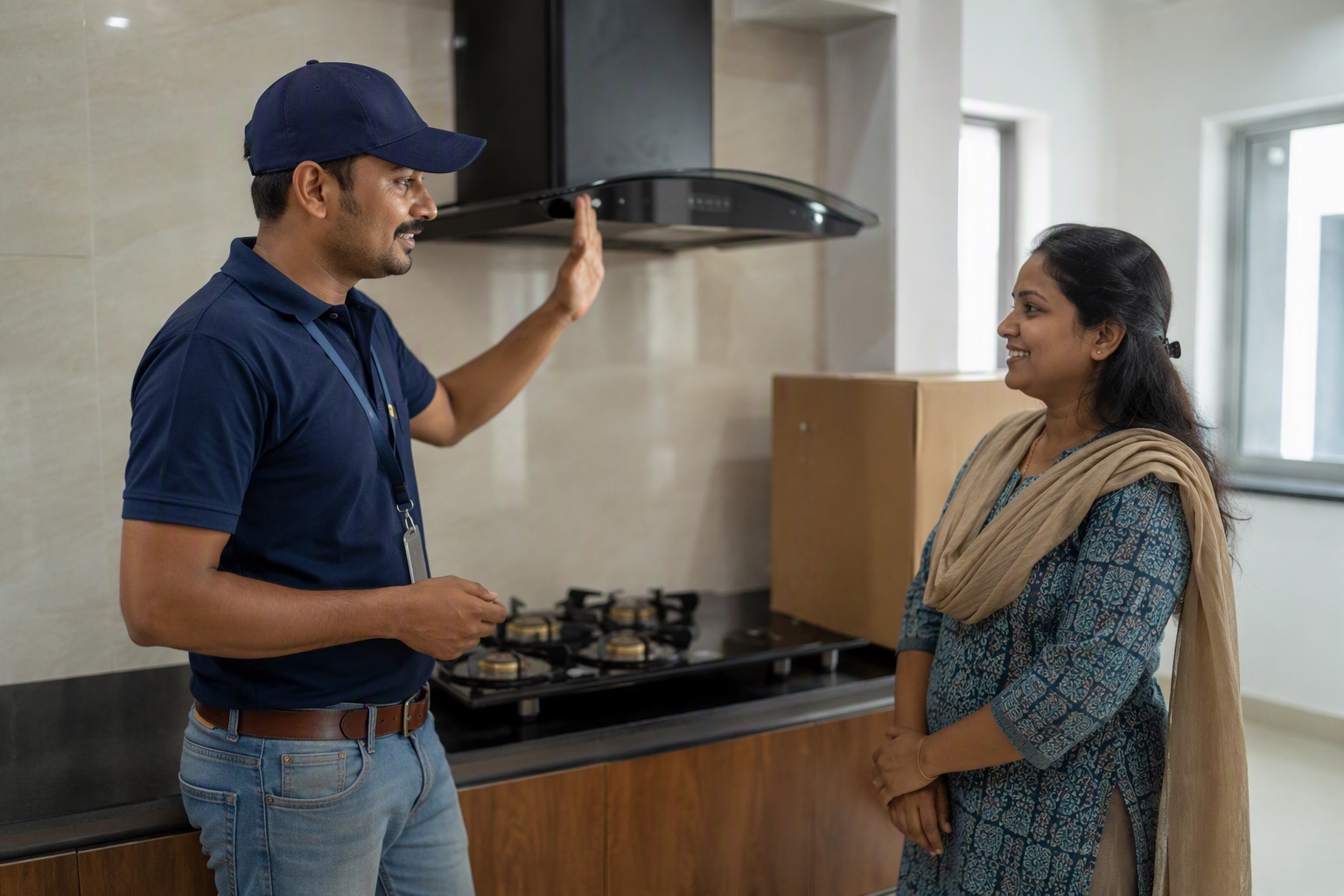
An installer sits at a strange point in the value chain: he rarely chooses the brand, but he almost entirely controls whether that brand works. A badly fitted air conditioner, a wrongly earthed geyser or a solar array on the wrong azimuth becomes your warranty claim, your service cost and your one-star review. Which is why installer incentive programs are usually justified on the service line rather than the marketing line — and why they are designed differently from electrician or plumber schemes.
Key takeaways
- Installer programs reward correct installation and registration, not purchase. The unit of reward is a completed, verified install.
- The business case is warranty-claim reduction and service-cost avoidance as much as brand preference — measure it there.
- Typical rates: ₹150–600 per registered appliance install, ₹500–3,000 for solar and large systems, ₹75–300 for fittings.
- The install registration is also your consumer data capture — for most durable brands it is the only reliable moment they ever learn who owns their product.
Who counts as an installer
The term covers several distinct populations, and lumping them into one scheme is the usual first mistake:
| Type | Typical categories | Brand influence | What to reward |
|---|---|---|---|
| Brand-authorised service technician | AC, appliances, water heaters | Low — already contracted | Quality, speed, correct registration, customer rating |
| Independent installer | AC, geysers, fans, chimneys, water purifiers | Medium — recommends when the customer asks | Install registration, correct commissioning, upsell of genuine spares |
| Trade installer | Tiles, doors, modular kitchens, false ceilings, sanitaryware | High — specifies adhesives, fittings and accessories | Material scans plus install registration |
| System integrator | Solar, CCTV, home automation, networking | Very high — designs and procures | System commissioning, capacity installed, service uptake |
The pattern to notice: influence rises as the installer moves from fitting a chosen product toward choosing the components himself. Where influence is low, reward quality; where it is high, reward specification as well.
Why install-registration is the right unit of reward
Unlike a coil of wire or a carton of fittings, a fitted appliance is a single, verifiable event with a customer attached. That makes the mechanic cleaner than scan-to-earn:
- The installer scans the serial or QR on the unit at the customer's premises.
- He captures the installation — a photograph of the fitted unit, sometimes with geo-stamp and the customer's confirmation.
- The platform validates that this serial has not been registered before and that the location is plausible.
- The reward is credited, the warranty is activated in the customer's name, and the brand acquires a verified end-customer record.
That fourth step is the quiet prize. Most durable-goods brands in India have almost no reliable picture of who owns their products, because the retailer holds the customer and the warranty card was never returned. Installer registration is the only touchpoint where the brand, the product serial and the end customer are in the same place at the same moment — which is why digital warranty management and installer incentives are usually built together, and why consumer loyalty and warranty programs depend on it.
Rate benchmarks by category
| Category | Reward per install | Typically also rewarded |
|---|---|---|
| Room air conditioner | ₹300–600 | Correct copper run, drainage slope, stabiliser advice |
| Water heater / geyser | ₹150–350 | Earthing check, pressure valve fitted |
| Water purifier | ₹150–300 | Filter-change service uptake |
| Chimney, hob, built-in appliances | ₹250–600 | Ducting done to spec |
| Ceiling fan, lighting fixture | ₹40–120 | Volume-driven; often bundled with electrician program |
| Sanitaryware, faucets, concealed cistern | ₹75–300 | Sealing and warranty registration |
| Tiles and adhesives | ₹2–8 per bag of adhesive | Correct adhesive grade for the substrate |
| Modular kitchen, wardrobes | ₹500–2,000 per project | Hardware brand compliance |
| Rooftop solar | ₹500–3,000 per kW installed | Commissioning report, monitoring activation |
| CCTV, networking, automation | ₹200–800 per system | Cable and accessory brand compliance |
Reward quality, not just quantity
This is where installer programs differ most sharply from influencer programs. Paying purely per install produces speed, and speed produces the exact failures you were trying to prevent. Build a quality component into the reward:
- Photo-verified installation checkpoints — the drain slope, the earthing connection, the mounting bracket. Two or three photographs, automatically checked and spot-audited.
- Customer rating gate — a one-tap rating from the homeowner released with the reward. Ratings below a floor trigger a review rather than an automatic block.
- Callback penalty — a service callback within 30 days on the same serial reduces or claws back the install bonus, with an appeal route.
- Certification multiplier — trained and assessed installers earn 1.5–2× the base rate. This is the cheapest way to make training attractive without paying for attendance.
- Spare-part authenticity — reward genuine spare usage explicitly, since counterfeit spares are where most installer-driven damage to a brand actually happens.
The service-cost business case
Frame the program in the numbers the service head cares about, not the marketing head:
| Lever | Typical effect | Where it shows up |
|---|---|---|
| Correct installation | 20–40% fewer first-year service calls | Service cost per unit |
| Warranty registration at install | 60–85% registration vs 10–25% by card | Customer database, cross-sell |
| Genuine spare usage | Fewer repeat failures | Warranty claim ratio |
| Installer retention | Lower retraining and rework cost | Service operations |
| Install-location data | Real service-network planning | Territory and manpower decisions |
A program that reduces first-year service calls by even a quarter usually pays for its entire reward pool from the service line alone, before any brand-preference benefit is counted. That is a materially easier internal argument than the one influencer programs have to make, and it is worth building the ROI case that way — see loyalty program ROI calculation.
Fraud patterns unique to installer programs
- Ghost installs — serials registered without ever leaving the warehouse. Controls: geo-stamped photographs, customer OTP confirmation, and cross-checks against dispatch data.
- Serial harvesting at the dealer counter — registering stock as installed to claim rewards. Controls: OTP to the end customer's number, and flagging installs whose location matches the dealer's coordinates.
- Photo reuse — the same installation photographed for multiple claims. Controls: image hashing, EXIF and timestamp checks, and randomised checkpoint requests so the required photograph is not predictable.
- Split claiming — one job registered by several members. Controls: one serial, one claim, with a clear dispute path.
- Collusive ratings — the installer supplying the customer's confirmation himself. Controls: OTP to a number verified against the sale record, not one typed in by the installer.
The general framework, including how to set an acceptable leakage rate before launch, is in loyalty program fraud prevention.
Designing for the installer's actual day
An installer does three to eight jobs a day, in someone else's home, often with the customer watching and impatient. Every second the registration takes is a second of visible awkwardness. Practical requirements:
- Registration in under sixty seconds, including photographs.
- Works offline — many installs are in basements, stairwells or buildings with poor coverage.
- No customer-side app or install required, ever. An OTP is the maximum acceptable ask of a homeowner.
- Reward visible immediately, even if a quality review is pending, with the pending state clearly labelled.
- One identity across brands where possible — an installer fitting four brands should not carry four apps.
Where to start
- Pick one category and one region. AC and water heaters are the usual starting points because seasonality makes the effect visible quickly.
- Instrument the baseline first: current registration rate, first-year service calls per unit, callback rate. Without these the program cannot be evaluated.
- Launch registration-plus-photo with a flat rate; add quality gates only after you understand the honest distribution.
- Add certification and its multiplier in quarter two.
- Expand by category, not by geography, once the quality gates are calibrated.
Frequently asked questions
What is an installer incentive program?
It is a brand-run scheme that rewards the person who physically fits the product — for registering the installation, doing it correctly and activating the warranty. Unlike an influencer program, the unit of reward is a completed and verified install rather than a purchase, and quality checks are usually built into the payout.
How much should an installer be paid per installation?
₹300–600 for a room air conditioner, ₹150–350 for a water heater, ₹250–600 for chimneys and built-ins, ₹75–300 for sanitaryware, ₹500–2,000 per modular kitchen project and ₹500–3,000 per kW for rooftop solar. Certified installers commonly earn 1.5–2× the base rate, which makes training attractive without paying for attendance.
How do you stop installers registering products that were never installed?
Require a geo-stamped photograph of the fitted unit, an OTP confirmation sent to the end customer's number taken from the sale record rather than typed in by the installer, and cross-checks against dispatch data. Flag installs whose location matches dealer coordinates, and use image hashing plus randomised photo checkpoints to catch reused photographs.
Should installer rewards depend on installation quality?
Yes, otherwise you are paying for speed and buying the failures the program was meant to prevent. Use photo-verified checkpoints, a customer rating released with the reward, and a callback penalty when a service visit is needed within 30 days on the same serial. Always provide an appeal route — a wrongful clawback costs more members than the money saved.
What is the business case for an installer program?
Mostly service economics. Correct installation typically reduces first-year service calls by 20–40%, and install-time registration lifts warranty capture from 10–25% to 60–85%. A program that cuts service calls by even a quarter usually pays for its whole reward pool from the service line before any brand-preference benefit is counted.
Do installers need to install an app?
The installer does, usually, because he is doing this several times a day and needs offline capability and a fast flow. The customer must never be asked to install anything — an OTP is the maximum acceptable ask of a homeowner, and requiring more will simply mean installs go unregistered.
How is an installer program different from an electrician or plumber program?
An electrician or plumber program rewards specification and purchase of materials he chooses. An installer program rewards the correct fitting and registration of a product someone else chose. The first is a marketing investment measured in share of specification; the second is largely a service investment measured in claim rates, registration coverage and callback frequency.