Plumber loyalty program in India: the complete guide
In plumbing, the person who chooses the brand is almost never the person who pays for it. A plumber writes the material list, the homeowner signs the cheque, and the counter bills whatever the list says. That single fact is why pipe, fitting and sanitaryware brands run plumber loyalty programs — and why the ones that treat it as a discount scheme fail while the ones that treat it as a trust programme compound for years.
Key takeaways
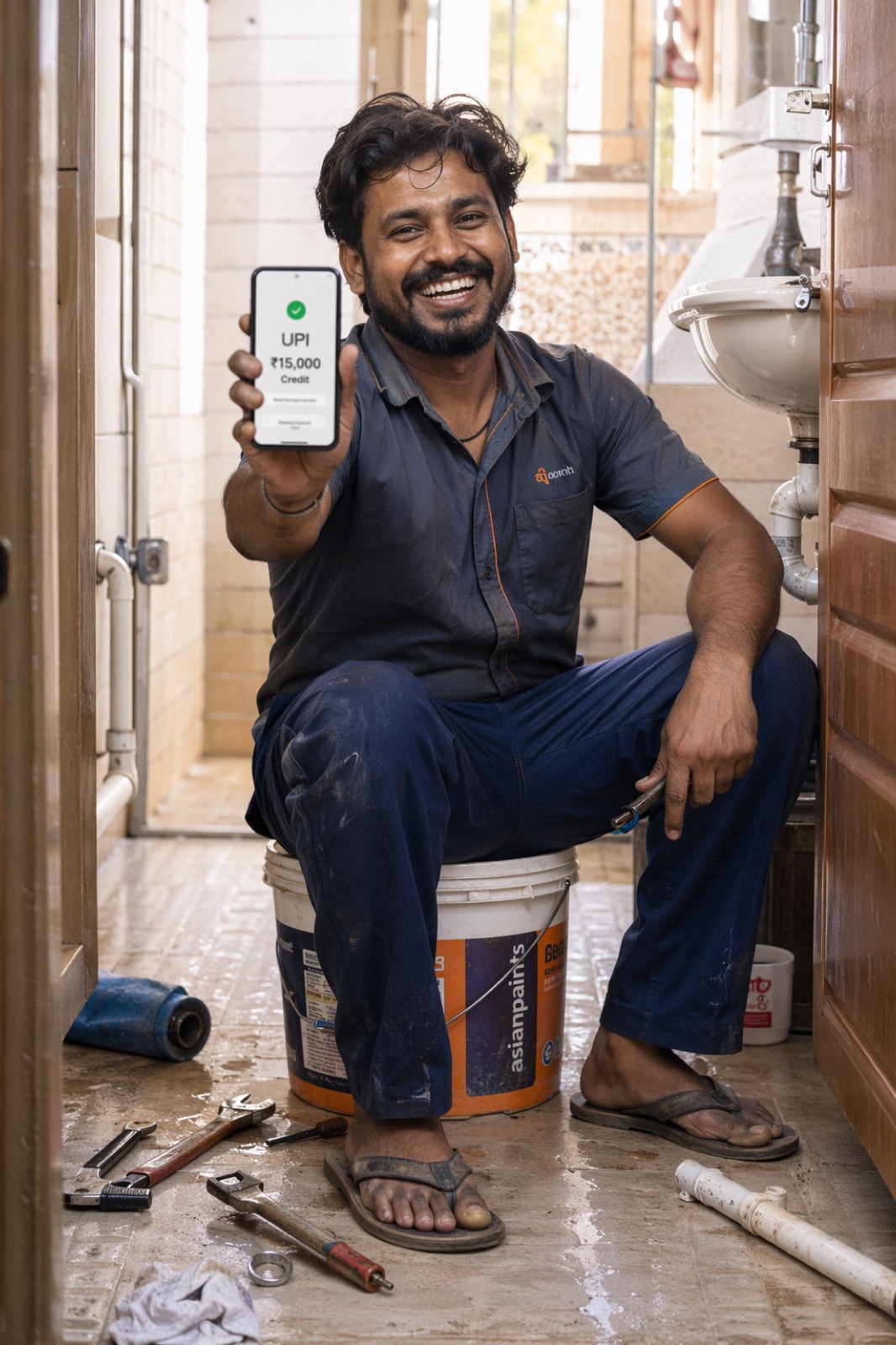
- A plumber loyalty program pays the installer directly for scanning the QR on pipes, fittings and solvent cement he actually installs — bypassing the counter, which controls margin but not specification.
- Realistic earn rates in India: ₹2–10 per fitting scan, ₹10–30 per pipe length or solvent-cement tin. An active plumber earns ₹1,200–3,500 a month — a 5–12% income supplement.
- Enrolment happens on WhatsApp, not an app store. Assisted onboarding at the counter converts 3–4× better than a QR poster alone.
- Budget 0.6–1.5% of channel revenue for the reward pool; add 10% TDS under Section 194R once a member crosses ₹20,000 of cumulative benefit in a financial year.
- The strongest mechanic in plumbing is one QR that both verifies genuineness and pays the reward — because counterfeit fear, not money, is the plumber's dominant emotion.
What a plumber loyalty program actually is
A plumber loyalty program is a brand-run scheme in which the plumber — not the dealer, not the homeowner — is enrolled as a member and rewarded for the products he installs. The mechanic in 2026 is almost universally scan-to-earn: every pipe length, fitting carton, valve and solvent-cement tin carries a unique QR code. The plumber scans it, the platform validates that the code is genuine and unused, and points or cash land in his account within seconds.
It sits alongside — never instead of — the dealer and retailer schemes a brand already runs. The counter earns on margin and volume slabs; the plumber earns on specification and installation. Confusing the two is the most common design error we see. If you are still deciding which tier to fund first, our comparison of channel loyalty versus retailer loyalty lays out the trade-off, and the channel loyalty pillar guide covers the full tier stack from distributor down.
Why plumbers, specifically, are worth paying
Three structural features of Indian plumbing make the plumber unusually powerful, and each one has a design consequence.
Concealed work cannot be inspected
Pipe runs vanish into walls and floors before the homeowner ever sees them. Nobody audits the brand of an elbow behind a tiled wall. The plumber's choice is therefore final and unreviewable — so the reward must reach him, because no amount of consumer advertising will.
The blame lands entirely on him
If a concealed joint weeps two years later, the wall is broken, the plumber redoes it free, and the colony hears about it. He is buying insurance against that, not buying pipe. Any benefit that reduces his leak risk — training, genuine-product verification, technical support — outperforms an extra rupee per fitting.
Purchases are frequent, small and repeated
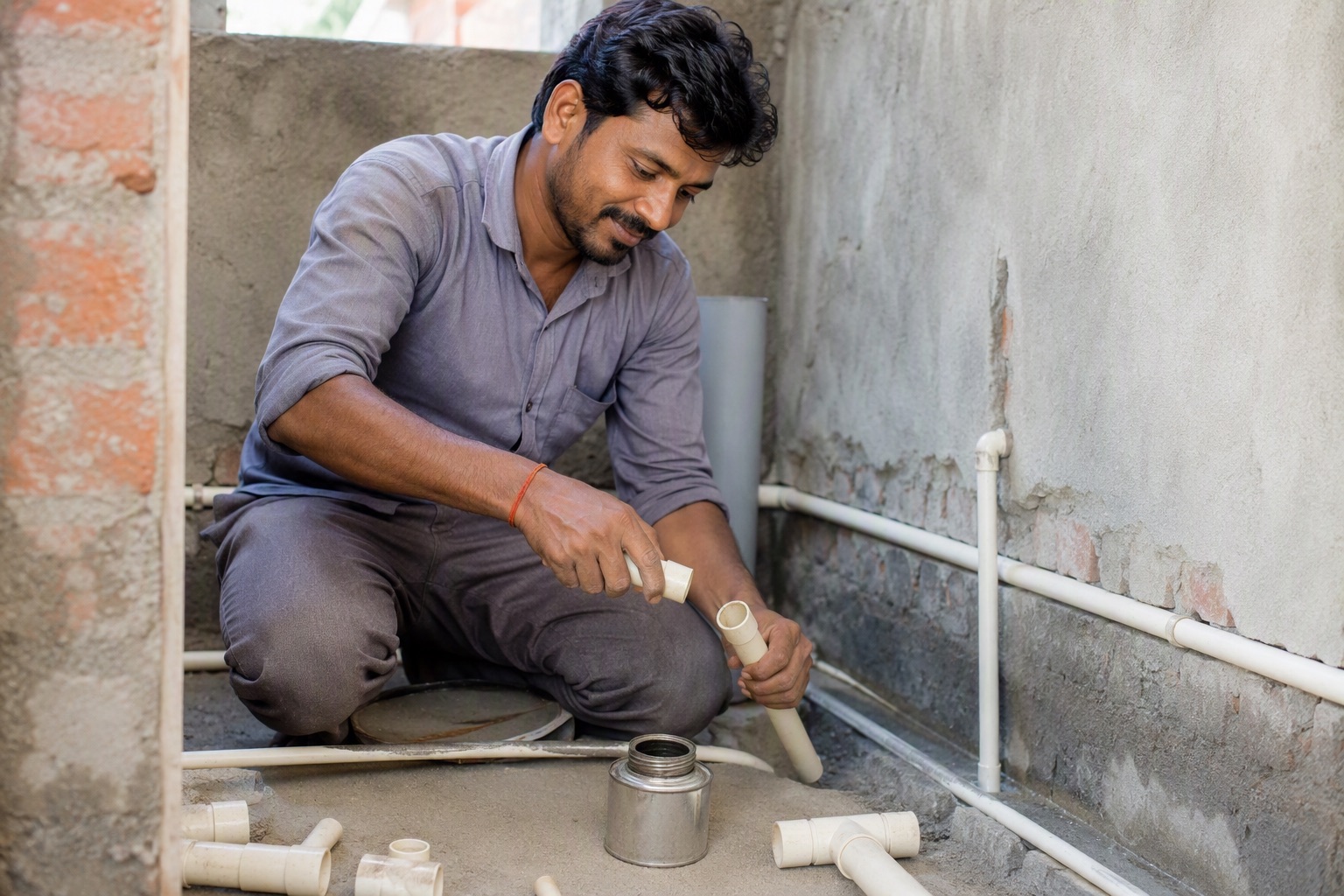
A single bathroom consumes 40–120 fittings. That is 40–120 scan events per bathroom, which makes plumbing one of the highest-frequency influencer categories in India and gives the brand a near-live feed of where its material is actually being installed.
Reward rates that work in Indian plumbing
Rates have to clear the plumber's mental threshold for bothering to scan, without exceeding what the category margin can carry. The bands below reflect what we see running successfully across CPVC, UPVC, GI and sanitaryware brands.
| Item | Typical reward | Why this level |
|---|---|---|
| Fittings (elbow, tee, coupler, union) | ₹2–10 per scan | High count per job; the volume, not the unit value, is what pays him |
| Pipe length (CPVC/UPVC, 3m) | ₹10–30 per scan | Higher value, lower count; anchors the brand choice for the whole line |
| Solvent cement / lubricant | ₹15–40 per tin | The genuine-cement decision is the single biggest leak-risk lever — pay for it |
| Valves, ball valves, brass items | ₹15–50 per scan | Premium SKU push; margin supports a visible uplift |
| Sanitaryware / faucet installation | ₹75–300 per registered install | Low frequency, high value; usually tied to warranty registration |
| Concealed cistern / wall-hung | ₹200–500 per install | Skill-dependent, warranty-sensitive, and worth certifying |
Sanity check the total before you launch: an active plumber doing two to three bathrooms a month plus repair calls should land in the ₹1,200–3,500 a month range. Below ₹800 the program is ignored; above ₹5,000 you are usually funding fraud rather than loyalty, and the arithmetic in our ROI calculation guide stops closing. The loyalty program cost calculator will model your own SKU mix in a couple of minutes.
Enrolment: the part most programs get wrong
Plumbers do not install apps to find out whether a scheme is worth their time. Every point of friction between the poster and the first rupee costs you roughly half your enrolments. The sequence that works:
- WhatsApp first. A number on the carton, a scan, or a missed call starts the conversation inside an app he already lives in. Native-app installs come later, for members who are already earning.
- Assisted onboarding at the counter. The dealer's counter boy enrols him in ninety seconds while his material is being billed. This single tactic typically triples enrolment versus passive signage.
- Minimum viable KYC. Name, mobile, town, trade. Ask for PAN and bank details at the first redemption, not the first scan — collecting them upfront kills a third of sign-ups.
- Pay the very first scan instantly. The demonstration that money is real is the entire onboarding argument. Delayed first payouts are unrecoverable.
- Language by default. Hindi, Tamil, Telugu, Kannada, Marathi, Odia — Odia especially, given how much of the trade's migrant workforce comes from Odisha.
For the deeper mechanics of getting low-literacy, high-suspicion users through a digital flow, see app adoption for low-literacy users and the WhatsApp loyalty guide.
Anti-counterfeit: the strongest mechanic in plumbing
Fake fittings and diluted solvent cement circulate widely, and the plumber usually cannot tell by eye. When a counterfeit fails, it fails as his failure. A QR that answers "is this genuine?" and "what did I earn?" in the same scan converts your reward budget into risk relief — which is worth far more to him than the money.
It also gives him theatre. Scanning a fitting in front of the homeowner and showing a green genuine-product screen makes him look like a professional and makes your brand the evidence of his honesty. That is a marketing asset no advertisement buys. The mechanics are in anti-counterfeit plus loyalty in one QR and on our anti-counterfeit solution page.
Fraud control without insulting honest members
Fitting-level QRs attract exactly the abuse you would expect: counter staff scanning cartons before sale, a single member scanning a district's worth of stock, codes photographed and shared in WhatsApp groups. The controls that hold up:
- Inner-seal or under-cap codes that are physically unreachable until the pack is opened — the highest-leverage single control.
- Geo-velocity rules — the same member scanning in two districts within an hour, or 300 fittings inside ten minutes, is not plumbing.
- Dealer-pattern detection — clusters of scans that resolve to the same counter coordinates month after month.
- Redemption-stage verification rather than scan-stage blocking, so an honest member is never stopped mid-job.
- Investigate before you clawback, and always explain. Honest members watch how the accused are treated; a wrongful block costs you ten members, not one.
The full control stack, including how to size an acceptable leakage rate, is in loyalty program fraud prevention.
Tax: Section 194R is not optional
Any benefit given to a plumber in the course of your business — UPI payouts, redeemed gifts, tool kits, foreign trips, insurance premiums paid on his behalf — is a benefit or perquisite under Section 194R. Once cumulative value crosses ₹20,000 per PAN in a financial year, 10% TDS applies. In an active plumber program a meaningful share of members will cross that threshold, so build for it on day one: collect PAN at first redemption, aggregate benefit value across every scheme the member touches, deduct transparently, show the deduction in his ledger, and issue certificates. Our Section 194R guide covers valuation of gifts-in-kind and the gross-up decision.
What to measure
| Metric | Healthy range | What it tells you |
|---|---|---|
| Enrolment-to-first-scan | > 70% within 14 days | Whether onboarding actually works |
| Monthly active scanners | 45–65% of enrolled | Real engagement, not sign-up theatre |
| Scans per active member / month | 60–200 | Whether he is scanning the whole job or a token few |
| Redemption rate | > 80% of accrued points | Unredeemed points are a broken promise, not a saving |
| Payout success on first attempt | > 97% | The single strongest predictor of retention |
| Share of business from scanning members | Rising quarter on quarter | The only number that proves incremental sales |
Definitions and calculation methods for each of these are in the loyalty KPI guide.
A realistic launch sequence
- Weeks 1–3: pick the scan-bearing SKUs, fix reward rates against margin, and model the annual pool.
- Weeks 4–7: serialise codes into the packing line; decide inner-seal placement with production, not marketing.
- Weeks 8–10: pilot in two districts with the twenty counters that already like you. Target enrolment and payout reliability, not volume.
- Weeks 11–14: fix what the pilot broke — usually onboarding drop-off and one payout edge case — then open the state.
- Quarter 2 onwards: layer training, certification and insurance on top of the cash rail. That is where retention comes from.
The full phased plan, including the budget model, is in how to launch a loyalty program in India, and the launch checklist tool tracks it.
Frequently asked questions
What is a plumber loyalty program?
It is a brand-run scheme that enrols plumbers as members and rewards them directly for the products they install. Each pipe, fitting, valve or solvent-cement tin carries a unique QR code; the plumber scans it, the platform validates that the code is genuine and unused, and cash or points reach him within seconds. It runs alongside dealer and retailer schemes rather than replacing them.
How much can a plumber earn from a loyalty program in India?
At typical Indian rates — ₹2–10 per fitting, ₹10–30 per pipe length, ₹15–40 per solvent-cement tin — an active plumber doing two to three bathrooms a month plus repair calls earns ₹1,200–3,500 a month. That is a 5–12% income supplement: enough to change which brand he specifies, not enough on its own to move him off a brand he already trusts.
What should a plumber loyalty program cost the brand?
Budget 0.6–1.5% of channel revenue for the reward pool, plus platform fees. Indian channel loyalty platforms typically run ₹30,000 to ₹3 lakh a month depending on monthly active users and modules. Add serialisation and printing costs at the packing line, and provision 10% TDS under Section 194R for members crossing ₹20,000 of cumulative benefit.
Do plumber rewards attract TDS under Section 194R?
Yes. Every benefit — UPI payouts, gifts, tool kits, trips, insurance premiums paid for him — counts toward the ₹20,000 per PAN per financial year threshold, after which 10% TDS applies. Collect PAN at first redemption, aggregate benefit value across all schemes the member touches, deduct transparently, and issue certificates.
How do you stop dealers from bulk-scanning plumber QR codes?
Put the code where it cannot be reached before the pack is opened — inner seals, under-cap codes, inside-carton labels. Then layer geo-velocity rules, dealer-pattern detection on repeat coordinates, and verification at redemption rather than blocking at scan. Investigate before clawing back, and always explain the decision, because honest members judge the program by how the accused are treated.
Should plumbers get cash or points?
Cash to UPI wins on enrolment and first-year engagement because it is unambiguous and immediately useful. Points win on long-term retention when the catalogue contains things he genuinely wants — tools, insurance, gold, appliances — and when tiers give status. Most successful Indian plumber programs run instant small cash for routine scans and a points-and-catalogue layer for milestones.
Is a plumber program different from a plumber incentive scheme?
An incentive scheme is usually a time-boxed push — double points this monsoon, a trip for the top fifty. A loyalty program is the permanent rail underneath: enrolment, identity, scan validation, ledger, payouts and tax. Incentive schemes run on top of that rail. Brands that run only schemes rebuild the plumbing every quarter and never accumulate member data.