Print forensics: catching fakes by how they were printed
Artwork can be copied perfectly. Printing cannot. A counterfeiter with your exact design file still has to put it on a different press, with different plates, different screening and different ink, and every one of those leaves a signature. This is the deepest layer of packaging authentication — and, honestly, the most difficult to actually capture in the field.
Print forensics authenticates packaging by examining properties of the printing process rather than the design: halftone screen frequency and angle, colour-to-colour registration, dot shape and gain, and substrate texture. These are set by the press and plates rather than the artwork file, so a counterfeiter reproducing the design exactly still produces a measurably different printed surface.
What the press leaves behind
Halftone screen frequency
Continuous tone is reproduced as a grid of dots. The frequency of that grid — lines per inch — is a property of the plate-making process. Different production route, different frequency.
Screen angle
Each colour separation is screened at a specific angle to avoid moiré. The angle set is a house convention of the printer. Two presses running the same file commonly use different angle sets.
Dot shape and gain
Round, elliptical or square dots, and how much they spread on the substrate, depend on plate, press, pressure and paper. Gain differences change apparent tone in a way that is measurable even when it is not obvious.
Colour-to-colour registration
How precisely the separations align. Genuine production has a characteristic small drift; cheaper production has a larger one.
Substrate texture
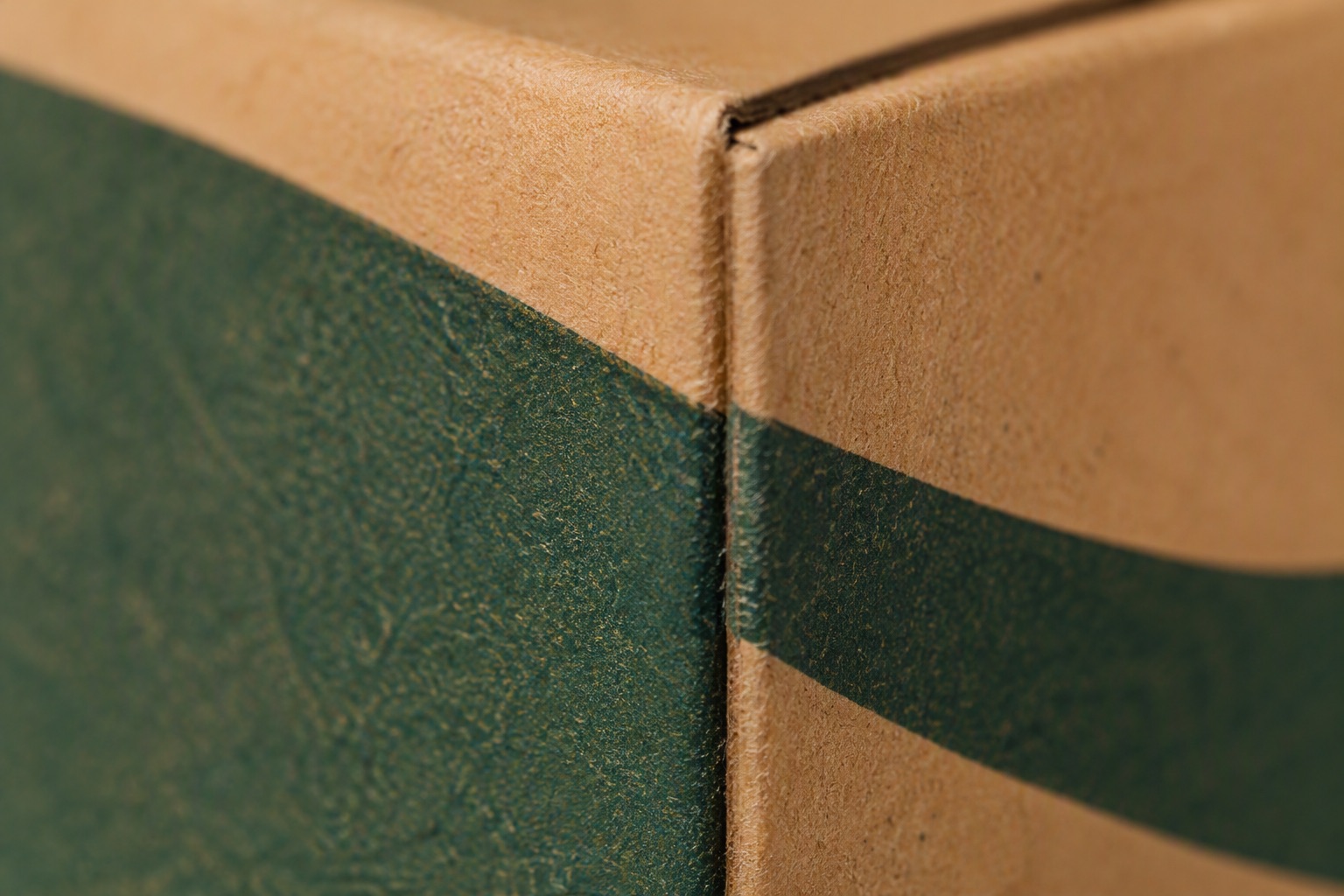
Paper fibre structure and coating differ between suppliers and show under macro imaging.
Ink formulation
Reproduced as a colour difference across the pack, particularly in spot colours and metallics, which are the hardest for a counterfeiter to match.
Why this is the hardest layer to defeat
Every other layer can, in principle, be beaten by a sufficiently careful copy. Geometry can be matched by working from the original file. Colour can be approached by careful proofing. But screening and registration are consequences of manufacturing, and matching them means acquiring the same class of press, the same plate-making process and the same substrate. That moves counterfeiting from a design problem to a capital-equipment problem, which is a different order of difficulty.
And why it usually contributes less than you would hope
This is where honest vendors and marketing departments part company. In field deployment, the print-forensics layer is frequently the least available evidence, for reasons that are physical rather than algorithmic:
- Phones cannot resolve the screen at normal distance. Halftone structure needs genuine macro capability. Many phones simply return no detectable screening, and the layer must then degrade to low weight rather than invent a finding.
- At ordinary capture resolution the frequency profile is dominated by the artwork, not the screening. Genuine and counterfeit can both score nearly identically, because what is being measured is the picture rather than the dots.
- Gloss varnish and lamination — standard on gravure-printed packaging — throw specular glare exactly where the detail is.
- Any re-encoding destroys it. A photograph forwarded through a messaging app has no usable halftone structure left.
The practical consequence: treat print forensics as strong evidence when you can capture it properly and as unavailable otherwise. A system that claims high confidence from print analysis on an ordinary phone photograph at arm's length is describing something that is not physically happening.
How to actually capture it
- Clip-on macro lens for field officers. Inexpensive, and it converts an unavailable layer into a working one.
- A dedicated macro shot in the capture sequence, on a defined area of the pack, so genuine and suspect macro shots are comparable.
- Diffuse light, never direct flash, to control specular reflection off varnish.
- Flatbed scanning for disputes. When a verdict will be argued over with a distributor or used in a legal notice, scan at high resolution rather than photograph.
- Untouched files. Store what the sensor produced, with no re-encoding anywhere in the chain.
What to ask a vendor
- At what capture resolution does your print-forensics layer start contributing real signal?
- What does the system do when no screening is detectable — does the layer degrade, or does it guess?
- Show me a case where print forensics changed the verdict, with the macro images.
- How do you handle gloss varnish and lamination?
- What happens to your forensic layers on a re-encoded image?
A vendor who answers the second question with "it degrades to low weight and we say so in the evidence" is describing a system built by people who have deployed one. The wider stack is in the anti-counterfeit software guide, and the layer that does most of the day-to-day work in image-based authentication.
Frequently asked questions
What is print forensics in counterfeit detection?
Authenticating packaging by examining properties of the printing process rather than the design — halftone screen frequency and angle, dot shape and gain, colour-to-colour registration, substrate texture and ink formulation. These are set by the press and plates, so an exact artwork copy printed elsewhere still differs measurably.
Why is print forensics hard to fake?
Because screening and registration are consequences of manufacturing rather than design. Matching them requires the same class of press, the same plate-making process and the same substrate, which turns counterfeiting from a design exercise into a capital-equipment problem.
Can a phone camera capture halftone screening?
Usually not at normal working distance. Halftone structure needs genuine macro capability, and many phones return no detectable screening at all. At ordinary capture resolution the frequency profile is dominated by the artwork rather than the dots, so genuine and counterfeit can score almost identically.
How do you capture print detail properly in the field?
Give field officers a clip-on macro lens, include a dedicated macro shot on a defined area of the pack so genuine and suspect images are comparable, use diffuse light rather than direct flash to control glare off varnish, and use flatbed scanning for disputes that will be argued over.
Does print forensics work on photos sent over WhatsApp?
No. Messaging apps re-encode images, and JPEG re-encoding destroys the fine halftone structure the analysis depends on. Forwarded photographs can indicate that something is worth investigating but cannot support a print-forensic finding.
What should a system do when it cannot detect screening?
Degrade that layer to low weight and say so in the evidence, rather than producing a confident finding from absent data. A vendor whose system claims strong print-forensic confidence from an arm's-length phone photograph is describing something that is not physically occurring.