A dealer strategy for agrochemical and fertilizer brands
In agri inputs the dealer network is the business. Distributors hold season credit, agro-dealers advise farmers, and the brand's field staff cover territories that are too large to visit every week. A dealer strategy decides who gets attention, which schemes, and on what payment terms.
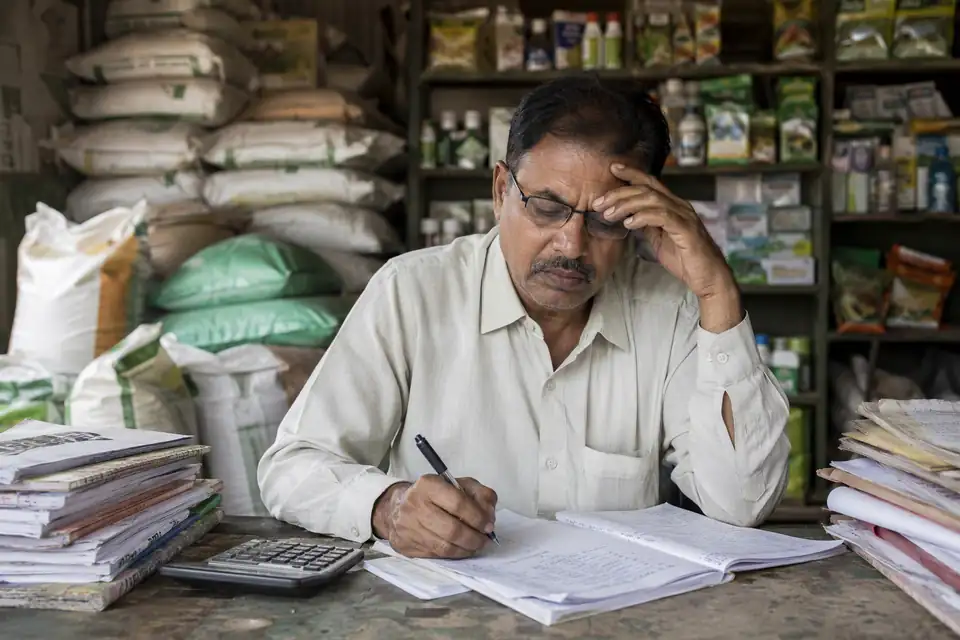
A good agrochemical and fertilizer dealer strategy segments distributors and agro-dealers by crop belt, portfolio breadth and payment behaviour, gives each segment a different scheme mix, and runs collections as part of the scheme rather than as a separate chase. Field staff work from a focus list that ranks dealers by the gap they can close in the current window, so pre-season visits go where they change the season.
How the agri input channel is structured
Most brands sell through some version of this chain, with regional variations:
| Tier | Role | What the brand needs from them | Typical scheme lever |
|---|---|---|---|
| C&F and depot | Holds stock by state | Availability before the window opens | Not usually incentivised |
| Distributor | Buys on credit, serves 50 to several hundred dealers | Early booking, wide placement, timely payment | Booking, early-lift, growth, collection |
| Agro-dealer or krishi kendra | Sells to and advises farmers | Recommendation, liquidation, genuine-stock trust | Crop slabs, liquidation, cash discount |
| Field staff | Visits dealers, runs farmer meetings and demos | Pre-season coverage, focus on near-miss dealers | Visit-gated incentives, leaderboards |
| Farmer | Uses the product | Repeat use, trust in the pack | Pack verification scan, optional reward |
Some brands also bill large dealers directly. Treat them as a distributor for scheme purposes and as a dealer for liquidation tracking.
Segment dealers on four dimensions
Size alone is a poor guide. A large dealer in the wrong crop belt for your portfolio, or one who pays late every season, is not where the next rupee of scheme money should go. Segment on four dimensions instead:
- Crop belt. Cotton, paddy, soybean, sugarcane, horticulture and wheat belts need different products and different timing. Eligibility should follow the crop map.
- Portfolio breadth. Seeds-only shops, crop protection specialists and full-range krishi kendras respond to different schemes. Breadth decides whether a cross-portfolio slab makes sense.
- Payment behaviour. Group dealers by how many days they usually take after harvest. Good payers earn better cash discount slabs; slow payers get collection-linked schemes and payout holds.
- Your share of their counter. A dealer where you are already the main brand needs a growth scheme. One where you are small needs a share-of-wallet or range-placement scheme.
Scheme mix by segment
| Segment | Main scheme | Supporting scheme | Watch-out |
|---|---|---|---|
| Large distributor, good payer | Growth over last season | Early-lift milestones, cash discount | Do not overpay for volume that was coming anyway |
| Large distributor, slow payer | Collection scheme | Booking scheme with payout on collection | Hold payouts on overdue |
| Full-range krishi kendra | Crop-portfolio slabs | Liquidation scheme on bill or scan | Keep the portfolio list short and clear |
| Seeds-only or specialist dealer | Product-specific slab | Range-placement scheme | Cross-portfolio targets will be ignored |
| New dealer in a new territory | New dealer scheme | Pack verification support | Track liquidation before scaling credit |
| Dealer where your share is low | Share-of-wallet scheme | Short-window launch scheme | Needs field visits, not just a circular |
Ranked by the gap each dealer can realistically close before the window shuts.
Focus lists for field staff
Field officers in agri inputs cover wide territories and have a few weeks before each season to matter. A focus list built from daily scheme positions tells each officer which dealers to visit this week: those within reach of a booking or early-lift slab, those with stock not yet liquidated mid-season, and those with collections due. It replaces a beat plan built only on dealer size. The sales officer focus list post covers how the ranking works.
Collections are part of the dealer strategy
Season credit is the largest risk in an agri input channel. Treat collections as a scheme, not as a separate follow-up:
- Run a collection scheme in the post-harvest window that pays for value collected within agreed days.
- Offer a cash discount with two or three payment-day slabs so early payers are visibly better off.
- Hold scheme payouts on accounts past the agreed days, and release them automatically when payment arrives.
- Show each dealer his ledger, outstanding and overdue next to his scheme progress, so he sees both in one place.
An illustrative example: a distributor has earned ₹42,000 on the season slab but has ₹3.5 lakh overdue beyond 60 days. The payout sits on hold, the hold is visible to him with the reason, and it releases when the overdue clears. Paying first and chasing later rarely works as well.
How Unotag supports the dealer strategy
Unotag sets scheme eligibility by region, dealer type or an uploaded code list, so crop belts and segments each get their own scheme mix. It calculates daily from ERP invoices, gives field staff a focus list, and shows dealers their ledger, outstanding and overdue alongside scheme progress. Holds and releases are recorded in the payout ledger. See the chemicals and fertilizers page, the dealer management system and rural trade loyalty programs.
Key takeaways
- Segment agri input dealers by crop belt, portfolio breadth, payment behaviour and your share of their counter, not by size alone.
- Give each segment its own scheme mix: growth for strong payers, collection-linked schemes for slow payers, liquidation schemes for krishi kendras.
- Run field staff from a focus list ranked by the gap each dealer can close in the current window.
- Treat collections as a scheme with cash discount slabs and visible payout holds.
- Show dealers their ledger and overdue alongside scheme progress.
Frequently asked questions
How should an agrochemical brand segment its dealers?
By crop belt, portfolio breadth, payment behaviour and the brand's share of the dealer's counter. These decide which scheme will change the dealer's behaviour better than size alone.
What scheme works best for slow-paying distributors?
A collection scheme in the post-harvest window, with payouts from volume schemes held until overdue accounts clear. A cash discount with payment-day slabs rewards those who pay early.
How do field officers decide which dealers to visit before the season?
Using a focus list that ranks dealers by the gap they can realistically close to a booking or early-lift slab, plus dealers with unliquidated stock or collections due.
Should large dealers billed directly get distributor schemes?
For purchase schemes, yes. For liquidation tracking, treat them as dealers, since they sell directly to farmers.
How do you run different schemes for different crop belts?
Define eligibility by region or an uploaded list of dealer codes, so each crop belt gets its own scheme with its own products and timing.
Should dealers see their outstanding in the scheme app?
Yes. Showing ledger, outstanding and overdue next to scheme progress makes the link between payment and payout clear to the dealer.