How to create an agrochemical and fertilizer incentive program
Agri input brands sell in two short windows a year, through distributors who carry season credit and agro-dealers who advise the farmer across the counter. An incentive program for this channel has to fit that calendar, prove what moved at each tier, and speak the dealer's language. This guide covers the setup, step by step.
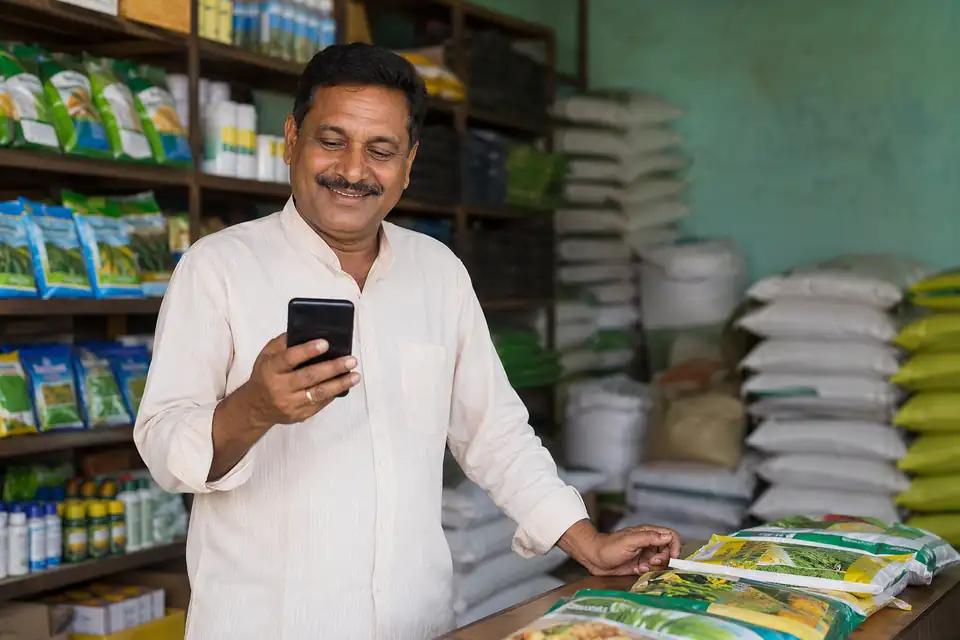
To create an agrochemical or fertilizer incentive program, map who you will reward (distributors, agro-dealers, field staff), build the scheme calendar around kharif and rabi, decide how each tier proves its sales, set slabs on last season's purchase history, and explain the rules in the dealer's own language before the season opens. Pair every volume scheme with a collection condition, because in agri inputs a sale that is not collected is not finished.
Why agri input programs need their own design
A scheme that works for paint or electricals often fails in crop protection, seeds and specialty fertilizers. The reasons are structural:
- Two short seasons decide the year. Most lifting happens in a few weeks before kharif and rabi sowing. A scheme announced after the window opens is too late to change anything.
- Credit and volume peak together. Distributors and dealers buy on season credit and pay after harvest. A program that rewards purchases without looking at payment simply funds overdue.
- The dealer is the advisor. At the krishi kendra the farmer often asks which product to use. The dealer's recommendation moves volume, so the dealer tier matters as much as the distributor tier.
- Demand depends on crop and rain. A cotton belt and a paddy belt need different portfolios and different slabs. One national scheme rarely fits both.
- Spurious packs are a real risk. Fake pesticides and seeds damage crops and trust. Verification at the pack level protects the farmer and the honest dealer.
Seven steps to set up the program
Map the channel and pick who you reward
List every tier between your depot and the farmer: C&F, distributors, agro-dealers and krishi kendras, and your own field staff. Decide which tiers the program covers in the first season. Most brands start with distributors and agro-dealers, then add field staff incentives.
Build the season calendar first
Mark the pre-season booking window, the early-lift window, the in-season liquidation period and the collection window for kharif and rabi in each region. Every scheme you design later sits on one of these dates.
Decide proof of sale for each tier
Distributor purchases come from your ERP invoices. Agro-dealer purchases are proved by the distributor's invoice, a photo of the purchase bill read by OCR, or a scan of the QR code on each pack. Choose one primary proof per tier so the rules stay simple.
Choose scheme kinds and set slabs on history
Early-lift milestones for the booking window, crop-portfolio slabs for the season, a collection scheme for the post-harvest window, and a new dealer scheme for fresh territories. Run each draft on last season's purchases to see what it would have cost and how many dealers would have reached each slab.
Write the rules in the dealer's language
Publish every scheme in Hindi, Marathi, Telugu, Kannada, Gujarati, Punjabi or whichever language the region uses, and let dealers ask questions by voice. A dealer who cannot read the circular does not work towards it.
Set payouts, approvals and tax treatment
Settle distributor schemes by credit note against the ledger and dealer schemes by UPI or reward points. Put holds and caps in place for overdue accounts. Rewards to business partners may attract TDS under section 194R above the threshold; confirm the treatment with your tax advisor.
Pilot one region for one season
Run the program in one crop belt for one season, compare lifting timing, collections and dealer activity with a similar region, then extend it.
- 1Channel mapDistributors, agro-dealers, field staff
- 2Season calendarBooking, early lift, liquidation, collection
- 3Proof of saleERP invoice, bill photo, pack scan
- 4Scheme kindsEarly lift, crop slabs, collection, new dealer
- 5Cost checkDrafts run on last season's purchases
- 6Local languageRules and progress by text and voice
- 7PilotOne crop belt, one season
A sample kharif scheme calendar
The timing below is illustrative. Shift the dates to the sowing calendar of each region and crop.
| Window | Typical timing (illustrative) | Scheme kind | Tier | What it rewards |
|---|---|---|---|---|
| Pre-season booking | April to mid-May | Short-window booking scheme | Distributor | Orders placed before the season opens |
| Early lift | May to early June | Milestone blocks | Distributor and agro-dealer | Lifting spread across the early weeks, not only at the end |
| Season | June to August | Crop-portfolio slabs | Agro-dealer | Volume across the portfolio for the region's crops |
| Liquidation | July to September | Secondary sales scheme | Agro-dealer | Stock moved to farmers, proved by bill or scan |
| Collection | October to November | Collection and cash discount | Distributor and agro-dealer | Payment within agreed days after harvest |
Worked example: an early-lift milestone scheme
An illustrative scheme for agro-dealers in one cotton district. The season target is 400 litres of a crop protection range. The scheme splits the early-lift window into three blocks and pays per block:
- Block 1 (first two weeks): lift 120 litres, earn ₹8 a litre.
- Block 2 (next two weeks): lift a further 120 litres, earn ₹6 a litre.
- Block 3 (last two weeks): lift a further 160 litres, earn ₹4 a litre.
A dealer who lifts on time across all three blocks earns ₹960 + ₹720 + ₹640 = ₹2,320. A dealer who lifts all 400 litres in the last week earns only the block 3 rate on what qualifies. The scheme pays more for early stock in the market, which is when the brand needs it. Milestone blocks are one of the scheme kinds explained in types of dealer schemes in India.
Where farmers fit
Many brands also want the farmer in the loop. The simplest route is a QR code on each pack that the farmer scans to confirm the pack is genuine, with an optional small reward. This gives the brand pack-level proof of where stock reached, helps the dealer show he sells genuine product, and works on WhatsApp without an app. For a broader view of how agri brands structure rewards across tiers, see loyalty programs for agri input brands.
What Unotag does for agri input brands
Unotag runs the scheme engine for distributors and agro-dealers on your ERP invoices (SAP, Tally, Oracle, Microsoft Dynamics, Zoho or Excel upload), with 16 configurable scheme kinds including milestone blocks, short-window, collection, cash discount and new dealer schemes. Each scheme can be tested on past purchases before launch, calculated daily, and explained to the dealer in his language by voice. Per-pack QR codes support verification and farmer scans with first-scan binding and duplicate blocking. Payouts go by credit-note file or UPI. See the chemicals and fertilizers page and the scheme calculation product.
Key takeaways
- Design the program around the kharif and rabi calendar; schemes announced after the window opens change little.
- Choose one proof of sale per tier: ERP invoice for distributors, distributor invoice, bill photo or pack scan for agro-dealers.
- Use early-lift milestone blocks so the program pays more for stock that reaches the market on time.
- Pair volume schemes with collection conditions and hold payouts on overdue accounts.
- Publish rules and progress in the dealer's language, and pilot one crop belt before going national.
Frequently asked questions
What is an agrochemical dealer incentive program?
A structured set of schemes that rewards distributors and agro-dealers for booking, lifting, selling and paying for crop protection, seed or fertilizer products in a season, usually through slabs, milestone blocks, collection schemes and cash discounts.
When should agri input schemes be announced?
Before the booking window of each season. For kharif that usually means well before sowing starts in the region. A scheme announced after lifting begins mostly rewards purchases that would have happened anyway.
How do you track what agro-dealers buy from distributors?
Through the distributor's invoice, a photo of the dealer's purchase bill read by OCR, or a scan of the QR code on each pack. Choose one primary proof per tier to keep the rules clear.
Should agri input schemes include a collection condition?
Yes. Dealers buy on season credit, so a scheme that rewards purchases without payment can increase overdue. Collection schemes, cash discounts and payout holds on overdue accounts keep volume and payment linked.
Can farmers be part of the program?
Yes, through a QR code on each pack that farmers scan to verify the product is genuine, with an optional small reward. Check product-specific regulatory rules with your regulatory and legal team before offering farmer rewards.
Is TDS applicable on rewards to agro-dealers?
Rewards and benefits given to business partners may attract TDS under section 194R above the annual threshold. The principle is set out in the law, but confirm the treatment for your program with your tax advisor.