Auto repair shop loyalty reward apps for parts and lubricant brands
The person who decides which oil goes into a car in India is rarely the owner of the car. It is the mechanic in a two-bay garage, and the garage owner who stocks the shelf behind him. A loyalty reward app is how a parts or lubricant brand becomes their default. This post is about building one that they use.
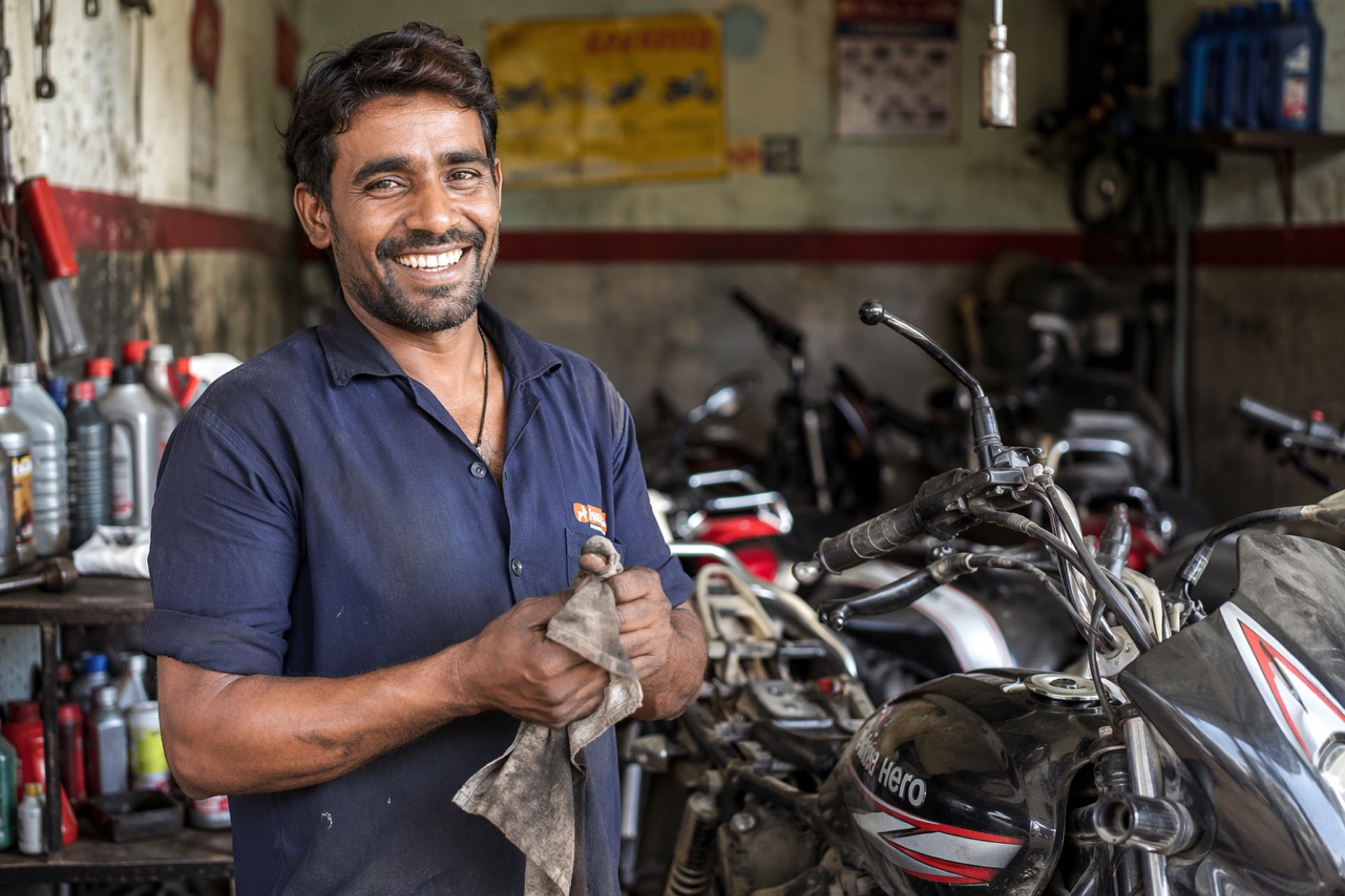
An auto repair shop loyalty reward app is a program run by a parts, lubricant, battery or tyre brand that rewards independent garages and mechanics for fitting or filling its products, proven by scanning a serialised QR code on the part, box or oil can, with rewards paid instantly by UPI or as points redeemed for tools, uniforms, training, insurance or catalogue gifts. Across programs Unotag runs, mechanic programs pay ₹10 to ₹30 per oil can and ₹5 to ₹50 per part, see 55 to 70 percent of enrolled garages active every month when payout is instant, and run on WhatsApp for the many small garages that will not install an app.
Garage or mechanic: who is the member?
Both, but they want different things and the program should treat them differently. The garage owner buys the stock and cares about margin, credit, and stock that moves. The mechanic fits the part and cares about cash today, tools, and being treated as a professional. A program that enrols only the owner loses the mechanic's recommendation; one that enrols only the mechanic annoys the owner who paid for the stock. The usual structure is a garage account with the owner as primary member and mechanics as linked members, with a stated split of the scan reward. Mechanic loyalty programs covers the mechanic side in depth, and how to make mechanics happy covers what they actually value.
| Garage owner | Mechanic | |
|---|---|---|
| Buys the product | Yes | No; recommends and fits |
| Rewarded for | Stocking, range, monthly volume | Each unit scanned at fitment |
| Prefers | Credit note, catalogue, business goods | Instant UPI, tools, uniforms |
| Typical split of a ₹30 can reward | ₹10 | ₹20 |
| Channel | App or WhatsApp | WhatsApp, in the local language |
The scan on the part or the oil can
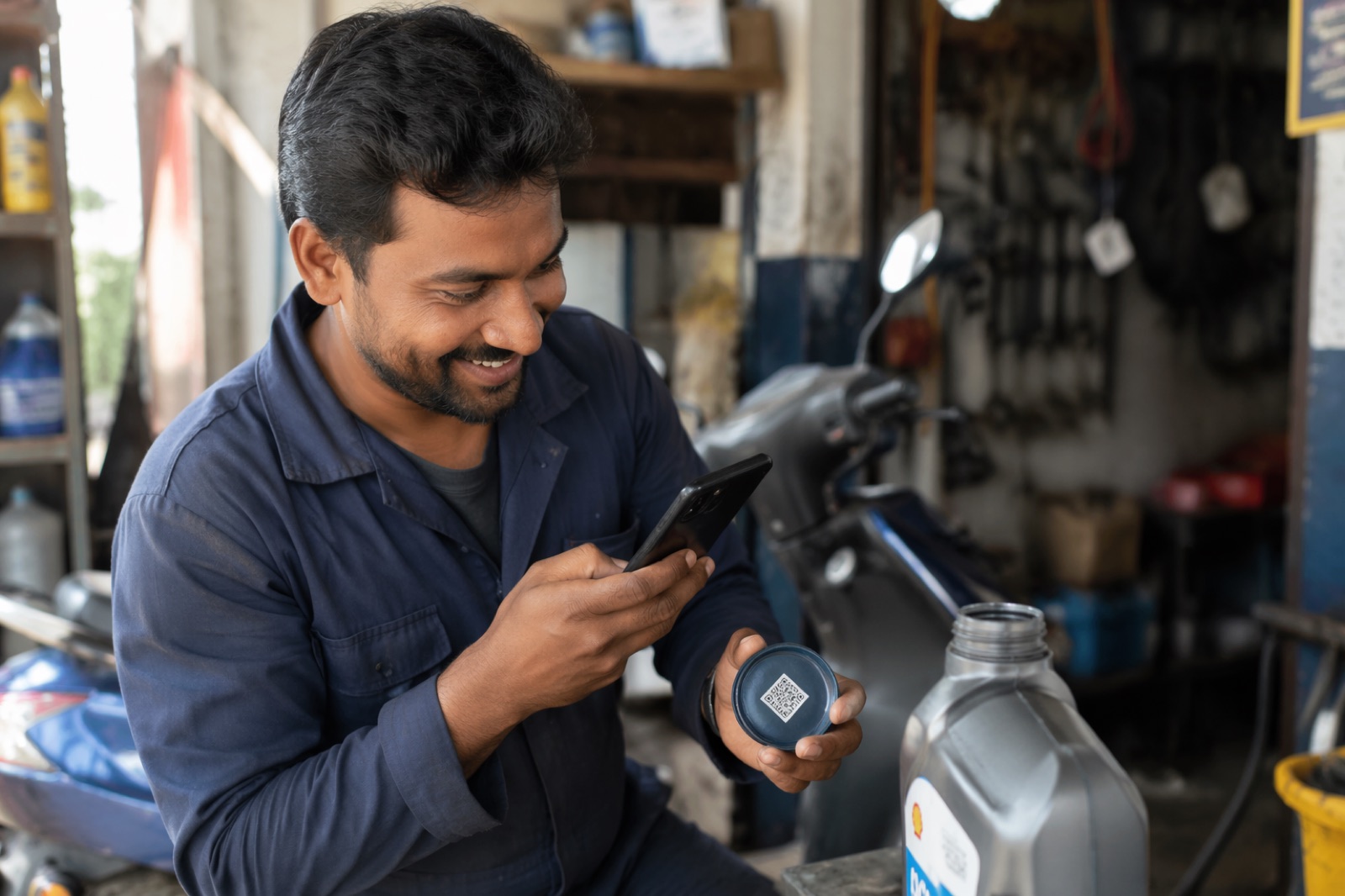
A serialised QR under the cap of an oil can, inside a filter box or on a brake pad set is scanned at the moment of fitment. The code cannot be scanned twice, so the unit is attributed to one garage and one mechanic. The scan is geo-stamped, so the brand sees where its product is actually used, which for a lubricant brand is the first honest map of secondary demand it has had. The same code lets the car owner verify the oil is genuine, which in a category with counterfeit lubricants is often the primary reason to print it. The lubricants industry page covers the category; the serialisation guide covers printing.
The reward mix
Instant UPI
The base reward for every scan, paid at a ₹100 to ₹200 threshold. Instant payout is the single biggest driver of monthly activity in mechanic programs.
Tools
A tool kit, torque wrench or diagnostic scanner at a fitment tier, delivered to the garage. Tools are used daily, carry the brand, and are talked about.
Uniforms and branding
Shirts, caps and a garage board at enrolment or an early tier. Cheap, visible, and they make the garage a brand outlet.
Training and certification
Short modules on the product and on the vehicle systems it goes into, with certification linked to a higher earn rate. Mechanics value being certified more than most brands expect.
Insurance
Accident or health cover for the mechanic at a tier, funded by the brand. It is the reward that mechanics' families remember.
Catalogue and gold
A 10,000-plus item catalogue with doorstep delivery, and gold coins for top tiers, for the garage owner and for festivals.
The no-app option for small garages
A large share of Indian garages are one or two mechanics with one phone between them. They will not install an app. The program should run on WhatsApp: enrolment by sending a name and a photo of the shop board, scanning by sending a photo of the code, balance and redemption by message, in the mechanic's language, including voice. An app can be offered to larger workshops that scan in volume. The WhatsApp loyalty programs post describes the flows; Unotag runs them in ten Indian languages.
Fraud in garage programs
- Cap scanning without filling. Caps collected from a distributor or from used cans. Defence: codes under a peel layer that is destroyed on opening, velocity limits per member per day, and a cap per garage.
- Distributor bulk scanning. A distributor enrols as a garage and scans cartons. Defence: garage verification by photo and location, and the dealer-bulk-scan pattern detection described in fraud prevention.
- Multiple identities. One mechanic with several numbers. Defence: KYC at the payout threshold and device fingerprinting.
- Cross-territory cans. Cans bought cheaply in one state scanned in another. Defence: geo-stamped scans matched against distributor dispatch.
Enrolling garages: the field work
Garages are enrolled by the distributor's salesperson or the brand's field officer on a regular visit, and the quality of enrolment decides the program. The enrolment that works is done at the garage with the first scan completed in front of the mechanic and the first reward credited before the field officer leaves, so the mechanic has seen the money arrive. Enrolment done against a headcount target, with the details keyed in later, activates at a fraction of the rate. Pay the field officer for activations, meaning a first scan within 30 days, rather than for enrolments. Photograph the shop board and record the location at enrolment, because both are used later to verify that the garage exists and to catch distributors enrolling as garages.
Worked economics for a lubricant brand
A lubricant brand selling 4-litre engine oil cans at a distributor price of ₹1,400 enrols 12,000 garages. Figures are illustrative ranges from comparable programs Unotag runs; the cost calculator models your own.
| Line | Assumption | Monthly figure |
|---|---|---|
| Active garages | 60 percent of 12,000 enrolled | 7,200 |
| Cans scanned per active garage | 18 to 25 per month | 130,000 to 180,000 cans |
| Scan reward | ₹30 per can, split ₹20 mechanic and ₹10 owner | ₹39 to ₹54 lakh |
| Tier rewards (tools, uniforms, insurance, training) | About 20 percent of scan rewards | ₹8 to ₹11 lakh |
| Platform subscription | By monthly active members | ₹1.5 to ₹2.5 lakh |
| Total program cost | ₹48 to ₹67 lakh | |
| Scanned can revenue at distributor price | 130,000 to 180,000 cans at ₹1,400 | ₹18 to ₹25 crore |
| Program cost as share of scanned revenue | 2.4 to 2.9 percent | |
| Observed lift in scanned volume, first two quarters | Comparable programs | 12 to 20 percent |
At a 12 to 20 percent lift on ₹18 to ₹25 crore of monthly scanned revenue, the incremental revenue of ₹2 to ₹5 crore a month is several times the program cost, before counting the counterfeit protection and the demand map. Section 194R applies to mechanics and owners whose annual benefit crosses ₹20,000, aggregated across cash, tools and prizes; the 194R guide covers it, and you should confirm with your advisor.
Key takeaways
- Enrol both the garage owner and the mechanic, with a stated split of each scan reward; they want different things.
- The scan on the can or part at fitment attributes the unit once, maps real demand and verifies genuineness for the car owner.
- Instant UPI drives activity; tools, uniforms, training, insurance and gold build attachment. Run it on WhatsApp for small garages.
- A lubricant program at ₹30 a can costs 2.4 to 2.9 percent of scanned revenue and shows 12 to 20 percent lifts in comparable programs.
Frequently asked questions
What is an auto repair shop loyalty reward app?
A program run by a parts, lubricant, battery or tyre brand that rewards garages and mechanics for fitting its products, proven by scanning a serialised QR on the part or oil can, with instant UPI rewards and tiers of tools, uniforms, training, insurance and gifts. It runs as an app or on WhatsApp.
How does a mechanic loyalty program work?
The mechanic scans a unique code on the part or can at fitment, in an app or by sending a photo on WhatsApp. The scan credits a reward instantly to UPI, counts towards tool and training tiers, and cannot be repeated because each code is single use.
Should the garage owner or the mechanic be the loyalty member?
Both. The owner buys the stock and wants margin, credit and business rewards; the mechanic fits the part and wants instant cash and tools. Enrol the garage with the owner as primary and mechanics linked, with a stated split of each scan reward.
Do mechanics need to install an app to join a loyalty program?
No. Most small garages will not install an app, so the program should run on WhatsApp: enrol by message, scan by sending a photo of the code, check balance and redeem in chat, in the mechanic's language. Offer an app to high-volume workshops.
What rewards do mechanics want from a loyalty program?
Instant UPI cash first, then tools such as kits, torque wrenches and scanners, uniforms and shop branding, certification that raises their earn rate, accident or health insurance, and gold coins at festivals. Catalogue goods suit the garage owner more.
How much does a garage loyalty program cost a lubricant brand?
Across comparable programs Unotag runs, ₹30 per 4-litre can plus tier rewards and platform subscription comes to 2.4 to 2.9 percent of scanned revenue, with 12 to 20 percent lifts in scanned volume in the first two quarters.
How do brands stop fraud in mechanic reward programs?
Codes under a peel layer destroyed on opening, velocity limits and caps per garage, garage verification by photo and location, KYC at the payout threshold, dealer-bulk-scan detection and geo-stamped scans matched against distributor dispatch.