WhatsApp vs a mobile app for channel loyalty
The install screen is where Indian channel programs go to die. Members are asked to download an app, grant permissions, create a password and verify an OTP, and a large share never get past the first step. WhatsApp removes the step. Here is what that changes and what it does not.
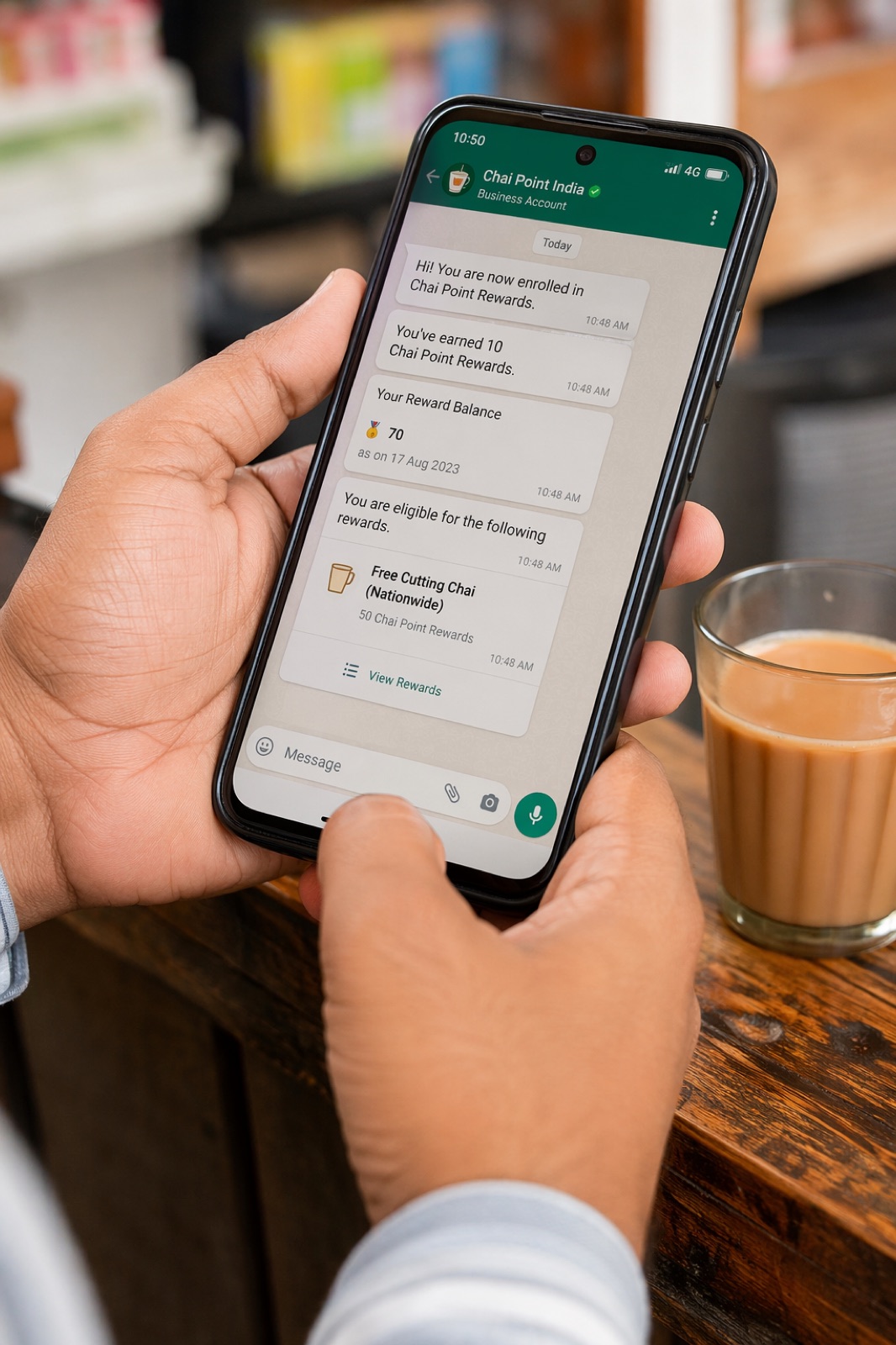
A WhatsApp-first channel loyalty program typically enrols and activates more trade members than an app-first program, because retailers, electricians and plumbers already use WhatsApp daily and need no install, login or training; scanning, balance checks and redemption all work inside a chat in the member's language. A mobile app still does better for high-frequency scanning, offline use, rich catalogues and dealer-side ordering. Most brands end up with WhatsApp as the default channel and an app for the members who want one, on the same ledger.
Where the two differ
| WhatsApp-first | App-first | |
|---|---|---|
| Install and login | None; the number is the identity | Store download, permissions, OTP, password |
| Activation of enrolled members | High; the first scan happens in the same chat as enrolment | Lower; a share never open the app after install |
| Language | Conversational, in the member's language, including voice | Menus translated; voice rare |
| Scanning volume | Fine for a few scans a day | Better for dealers scanning in bulk or offline |
| Catalogue browsing | Limited to lists and images in chat | Full catalogue with search and filters |
| Push and re-engagement | Template messages, opened at very high rates | Push notifications, often disabled |
| Cost per message | Per-conversation pricing from Meta | None beyond hosting |
| Ordering and DMS functions | Basic | Strong |
Why activation is the number that matters
Enrolment is easy to buy: a field team with a target will enrol anyone. Activation, meaning the member's first earning action, is what predicts a program's health, and it is where apps lose. On WhatsApp, enrolment and first scan are the same conversation: the member sends the code photo, the bot credits the points, the balance appears. There is nothing to come back to. The app adoption guide covers the low-literacy and shared-phone realities that make this gap wider in tier-two and rural markets.
What an app still does better
- Bulk and offline scanning. A dealer scanning in two hundred coils, or a site with no signal, needs a native camera flow that queues scans.
- Catalogue depth. A ten-thousand item gift catalogue is unusable as a chat list; the app gives search, filters and wish lists.
- Ordering. If the program is also the dealer's ordering and ledger channel, an app is the right container. See dealer ordering.
- Rich content. Training modules, certification and video sit better in an app.
The hybrid most brands run
WhatsApp as the default for every member, because it maximises the number of people who ever earn; the app offered, never required, for members who scan often, order or browse. One ledger, one member identity keyed on the mobile number, so a member can move between them. The WhatsApp portal and WhatsApp loyalty programs pages show the flows, and the multilingual guide covers language.
Costs to plan for
WhatsApp Business API conversations are priced per conversation by Meta, with marketing templates costing more than utility and service messages. A program that sends one scheme announcement a month to fifty thousand members and answers their scans as service conversations has a modest bill; one that sends weekly marketing templates does not. Design the message plan before the program, not after the first invoice. The communication plan guide helps.
Key takeaways
- WhatsApp removes the install step, which is where most trade members are lost; activation is the metric it improves most.
- Apps still win for bulk or offline scanning, deep catalogues, ordering and training content.
- Run WhatsApp as the default and the app as an option, on one ledger keyed to the mobile number.
- Plan the WhatsApp message mix up front; marketing templates cost more than service replies.
Frequently asked questions
Is WhatsApp better than an app for a loyalty program in India?
For enrolling and activating trade members, usually yes: no install, no login, and the first scan happens in the same chat. An app is better for bulk or offline scanning, large catalogues and ordering. Most brands run both on one ledger.
Can members scan QR codes on WhatsApp?
Yes. The member photographs the code in the chat and the bot decodes it, credits the points and replies with the balance. High-volume scanning is smoother in an app.
Do retailers install brand loyalty apps?
A significant share do not, or install and never open them. Shared phones, low storage and low literacy make the gap wider outside metros, which is why WhatsApp-first designs activate more members.
What does WhatsApp messaging cost for a loyalty program?
Meta prices WhatsApp Business API by conversation, with marketing templates costing more than utility or service messages. A program that limits marketing broadcasts and handles scans as service conversations keeps the bill modest.
Can a loyalty program run in regional languages on WhatsApp?
Yes, conversationally and including voice notes. Unotag's WhatsApp flows run in ten Indian languages and the bot mirrors the language the member writes in.
Do I need both an app and WhatsApp?
Not at launch. Start WhatsApp-first to maximise activation, add the app when members who scan in bulk, order or browse a large catalogue ask for it.