AI in channel loyalty programs: what it does today
Every platform now has an AI slide. This page is the version without the slide: the five places where AI is doing real work in Indian channel programs this year, what each one needs to be true, and the places where it is still a demo.
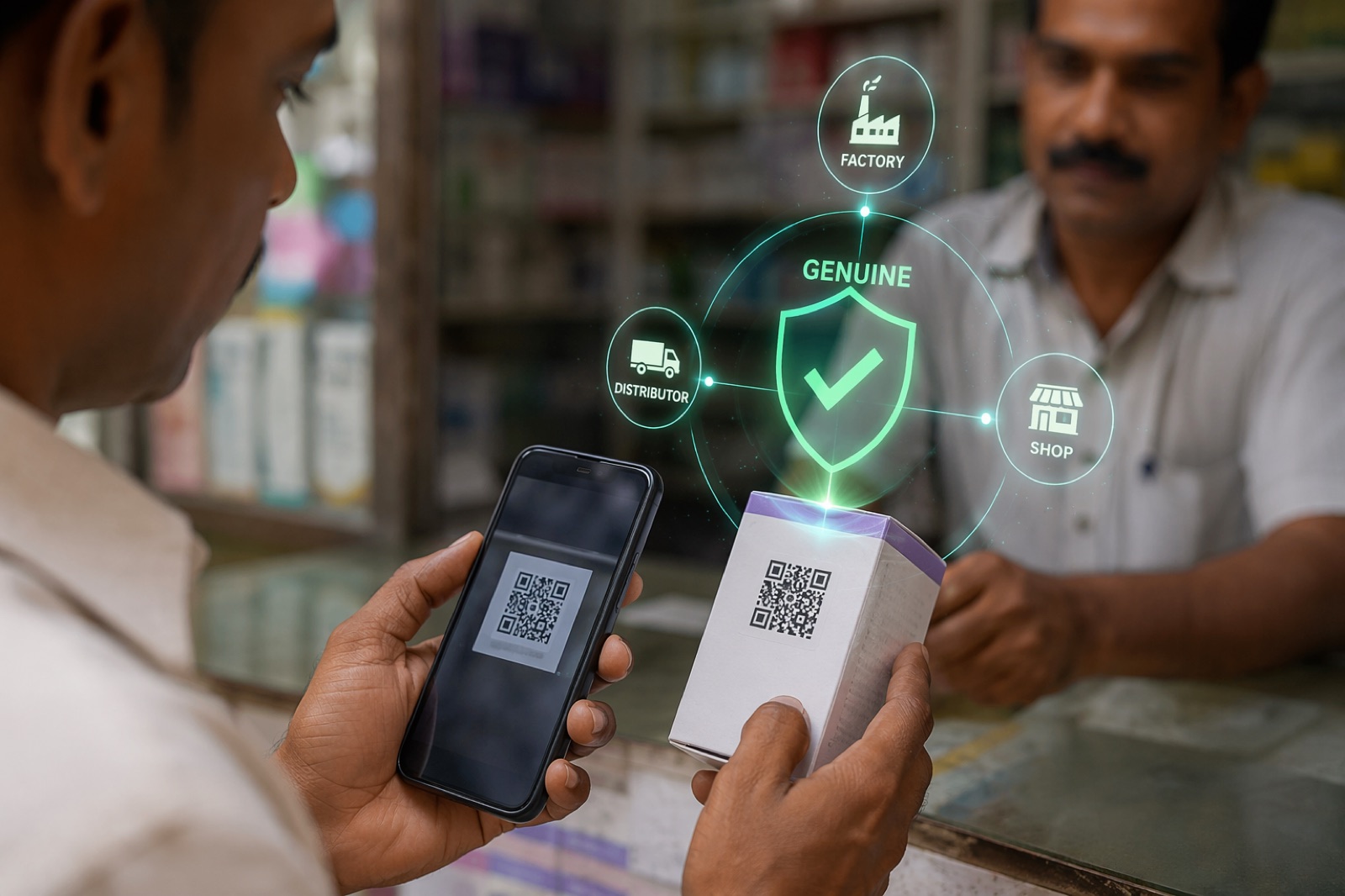
AI is doing five real jobs in Indian channel loyalty programs today: answering members in their own language by voice and chat on WhatsApp, which removes most of the support desk load; drafting and simulating schemes so a manager can see the cost of a slab change before launching it; detecting fraud patterns such as dealer bulk scanning and related-party invoices that rules alone miss; authenticating products from a photograph where no code exists; and deciding who to nudge, when and about what, from the member's own history. It is not yet reliably replacing human field visits or judging whether a program's objective was the right one.
Five jobs AI does now
Member support in ten languages, by voice
A plumber sends a voice note in Tamil asking why yesterday's scan did not credit; the assistant transcribes it, checks the ledger, answers in Tamil by voice, and opens a ticket if the scan is genuinely missing. This is the largest cost line AI removes, because support volume scales with members and humans in ten languages do not. See WhatsApp vs app.
Scheme drafting and what-if
A manager describes the objective in a sentence; the assistant proposes slabs, weights and budget, then simulates the cost against last year's invoices. The value is not the draft, it is the simulation, which catches the slab that pays the top ten dealers for what they already buy. The slab designer is the manual version.
Fraud pattern detection
Rules catch velocity and geography. Models catch the shape of collusion: a dealer whose retailers all scan within the same hour, invoices between related GSTINs that inflate before scheme close, members whose scan geography never varies. See fraud prevention.
Image-based authentication
Where product carries no code, a photograph of the pack compared against a learned distribution of genuine samples returns a verdict. It is honest about its limits: phones cannot resolve halftone at working distance, curved packs are hard, and the first fifty verifications are calibration. See image-based authentication.
Journeys and nudges
Who has gone quiet, who is close to a slab, who scanned a competitor's SKU last month according to the field team: the system decides the message, language and moment, with control groups so the uplift is measured rather than assumed.
What each one needs to be true
| Job | Precondition | Fails when |
|---|---|---|
| Voice and chat support | Ledger access in real time; language coverage; a human escalation path | The assistant answers confidently about a scan it cannot see |
| Scheme what-if | Clean invoice history by member and SKU | History has gaps, so the simulation is fiction |
| Fraud detection | Enough history to learn normal; a review queue with humans | Every flag auto-blocks and honest members are punished |
| Image authentication | 20–50 genuine samples per SKU; flat, well-lit photographs | Curved packs, re-encoded images, exact uniform-scale copies |
| Nudges | Control groups; frequency caps; quiet hours | Members are messaged daily and mute the number |
Where it is still a slide
- Replacing field visits. An assistant can prepare the visit and record it; it cannot walk into the shop. Programs that cut the field team on the strength of AI lose enrolment quality within a quarter.
- Choosing the objective. AI can optimise the slab for an objective; it cannot tell you the objective was wrong. That remains the manager's job.
- Fully autonomous payouts. Money leaving the company should still pass a human threshold review, even when the model is right most of the time.
Questions to ask a vendor about AI
- Show me the assistant answering a member's ledger question in a regional language, live, not recorded.
- Show me a scheme simulation against our invoice history and what it flagged.
- What does a fraud flag do: block, hold or queue for review? Who reviews?
- For image authentication, what is the failure rate on our packaging, and what are the stated limits?
- Where does the model run, what data leaves our environment, and is it used to train anything else? See the security page.
The AI tools page shows each of the five in the Unotag product.
Key takeaways
- Real today: multilingual voice support, scheme what-if, fraud pattern detection, image authentication, measured nudges.
- Each needs a precondition: live ledger access, clean history, human review, genuine samples, control groups.
- Not real yet: replacing field visits, choosing the objective, fully autonomous payouts.
- Ask for live demonstrations on your own data, not recordings.
Frequently asked questions
How is AI used in channel loyalty programs?
Mainly for multilingual voice and chat support to members on WhatsApp, drafting and simulating schemes, detecting fraud patterns such as bulk scanning and related-party invoices, authenticating products from photographs, and deciding who to nudge and when with control groups.
Can an AI assistant answer dealer and electrician queries in regional languages?
Yes, by voice and text, provided it has real-time access to the member's ledger and a human escalation path. This removes most of the support desk load, which otherwise scales with member count.
Can AI design a trade scheme?
It can draft one and, more usefully, simulate its cost against invoice history to show which members would be paid for what they already buy. Choosing the business objective remains a human decision.
How does AI detect fraud in loyalty programs?
By learning what normal scanning and invoicing look like and flagging patterns rules miss: retailers under one dealer all scanning in the same hour, invoices between related GSTINs inflating before scheme close, or members whose scan location never varies. Flags should go to a review queue, not auto-block.
Can AI verify a product is genuine without a QR code?
Yes, within limits. A photograph is compared against a learned distribution of 20 to 50 genuine samples per SKU. It struggles with curved packs, re-encoded images and exact uniform-scale copies, and the first verifications are calibration.
What should I ask a loyalty vendor about their AI?
Ask for live demonstrations on your data, what a fraud flag actually does, the stated limits of image authentication on your packaging, and where the model runs and whether your data trains anything else.