Scan-based vs invoice-based loyalty programs
Every channel program has to answer one question before it pays anyone: what is the evidence that this member deserves this reward? There are two workable answers in India, a scanned code on the product or an invoice, and the choice shapes everything downstream.
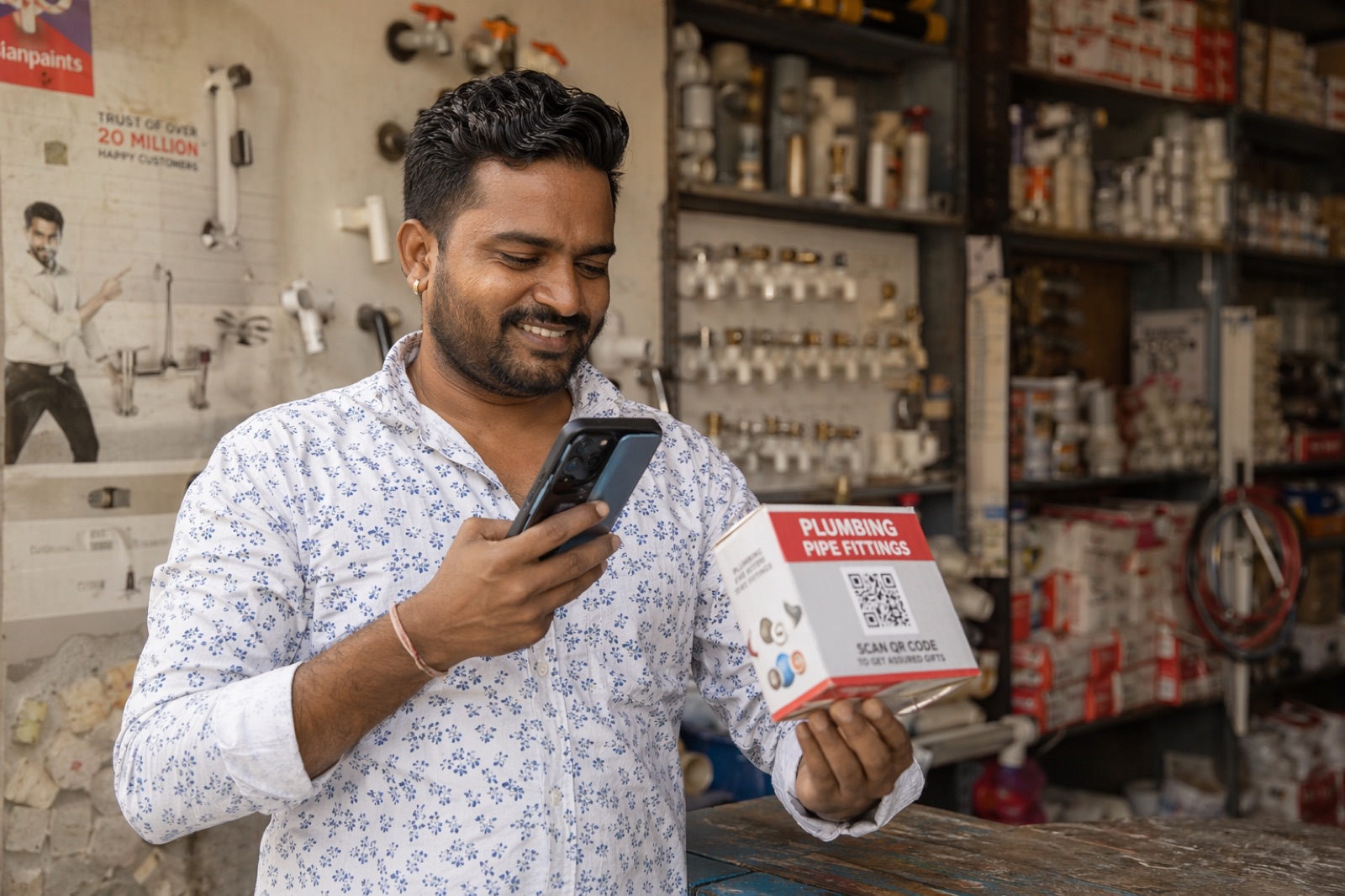
A scan-based loyalty program rewards a member for scanning a unique QR code on the product, which proves a specific unit reached that person; an invoice-based program rewards a member for uploading or syncing a purchase invoice, which proves a transaction occurred. Scan programs suit trade influencers and retailers where the physical unit matters and counterfeits are a concern; invoice programs suit dealers and distributors whose purchases are already documented and where reward should track value rather than units. Most mature Indian programs run both: scans for the influencer tier and invoices for the dealer tier.
The two kinds of evidence
| Scan-based (QR on product) | Invoice-based (bill upload or DMS sync) | |
|---|---|---|
| What it proves | This unit was in this member's hands | This purchase happened between these two parties |
| Best tier | Influencers, retailers, sub-dealers | Dealers, distributors, large retailers |
| Reward basis | Per unit, weighted by SKU | Per rupee of invoice value |
| Infrastructure | Serialised codes printed on packs; packaging lead time | OCR or DMS/ERP integration; no packaging change |
| Main fraud | Dealer bulk scanning; code leakage from the print vendor | Fake or duplicate bills; inflated invoices between related parties |
| Also delivers | Counterfeit verification, geographic sell-through map | Secondary sales data, credit behaviour |
| Time to launch | 6–12 weeks including printing | 2–6 weeks |
When scan wins
Scan is the right evidence when the reward is for the act of choosing or installing your product rather than for buying it. An electrician who fits your switches did not buy them; the retailer did. The only proof that the electrician's hands touched the unit is a code inside the pack that only the installer reaches. It also wins whenever counterfeits are in the market, because the same code answers the consumer's question about genuineness, and whenever you need to know where product is actually consumed, which invoices cannot tell you. See the QR code program guide and in-pack vs on-pack codes.
When invoice wins
Invoice is the right evidence when the member is a documented buyer and you want reward to track value. A dealer buying forty lakh a month should not be scanning cartons; the invoice already exists in your ERP, and syncing it removes any manual step. Invoice programs also handle range-width and growth-on-base schemes naturally, because the invoice carries SKU mix and can be compared with last year. The invoice incentives feature and secondary sales tracking guide go deeper.
Bill upload versus DMS sync
Within invoice-based programs there are two sources. Bill upload asks the member to photograph the invoice; it works for retailers buying from distributors whose systems you cannot see, at the cost of OCR errors and duplicate-bill fraud. DMS or ERP sync pulls the invoice directly; it is clean but only reaches the tier whose purchases you can see. A common structure is DMS sync for direct dealers and bill upload for retailers buying from them, with duplicate detection across both.
Running both
The strongest programs treat scan and invoice as two evidence types on one member ledger. The distributor is rewarded from ERP invoices, the retailer from bill uploads or scan-in of stock, and the electrician from in-pack scans. Because all three sit on one ledger, the brand can see the full path of a unit from primary sale to installation, which is the data that makes the next scheme better. Types of channel loyalty programs shows the common combinations.
Key takeaways
- Scan proves the unit reached the member; invoice proves the purchase happened. They answer different questions.
- Scan for influencers and retailers, invoice for dealers and distributors; mature programs run both on one ledger.
- Scan needs packaging lead time and guards against bulk scanning; invoice needs OCR or integration and guards against fake bills.
- Scan also delivers counterfeit verification and consumption geography that invoices cannot.
Frequently asked questions
What is a scan-based loyalty program?
A program in which members earn by scanning a unique QR code printed on each unit of product, proving that the specific unit reached them. It is the standard design for trade-influencer and retailer programs in India.
What is an invoice-based loyalty program?
A program in which members earn against purchase invoices, either uploaded as photos or synced from the brand's DMS or ERP, with rewards calculated on invoice value and SKU mix. It suits dealers and distributors.
Which is better for electricians and plumbers, scan or invoice?
Scan. Influencers do not buy the product, so no invoice names them; an in-pack code that only the installer reaches is the only evidence of their involvement.
Which is better for dealers and distributors?
Invoice, usually synced from the ERP. Their purchases are already documented, reward should track value, and range-width or growth schemes need the SKU mix that an invoice carries.
What fraud does each type attract?
Scan programs attract dealer bulk scanning and code leakage from the print vendor. Invoice programs attract fake, duplicate or inflated bills. Both are manageable with velocity rules, geo-fencing and duplicate detection.
Can one program use both scans and invoices?
Yes, and most mature programs do: ERP invoices for distributors, bill upload or stock scan-in for retailers and in-pack scans for influencers, all on one member ledger.
How long does each take to launch?
Invoice programs launch in two to six weeks because nothing changes on the pack. Scan programs take six to twelve weeks because serialised codes must be printed into packaging.