Reseller reward programs that do not cost margin
The reseller is the tier the brand cannot see. They buy from your distributor, not from you; they stock four competing brands; and they decide which one comes off the shelf when a customer asks for a switch, a tap or a charger. A reseller reward program reaches them without a discount on the invoice.
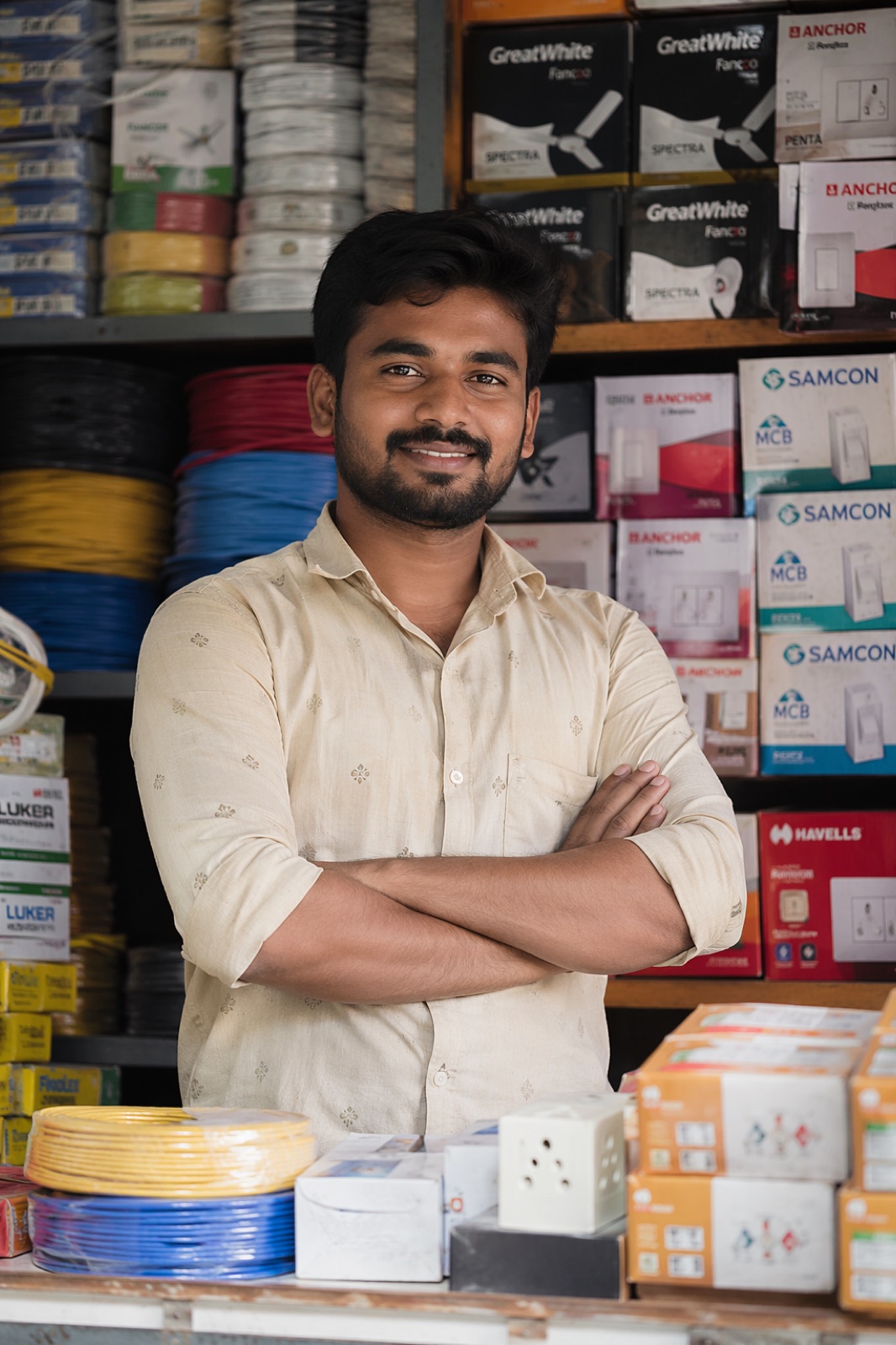
A reseller reward program is a manufacturer-run incentive for the sub-dealers, counters and small retailers who buy through distributors rather than directly from the brand. Because the brand has no invoice with a reseller, the program earns on scans of serialised QR codes on cartons or units, or on uploaded distributor bills, with rewards paid by UPI at a low threshold or from a gift catalogue, and tiers based on monthly scanned value. Across programs Unotag runs in India, reseller rewards land between 1 and 3 percent of the reseller's purchase value, which is cheaper than a distributor-level price cut because it is paid only on verified sell-in to the counter and never touches the invoice.
Who the reseller is in Indian trade
In Indian channel language the reseller is the sub-dealer or retailer: the electrical counter buying from a distributor, the plumbing shop buying from a stockist, the mobile accessories counter buying from a wholesaler, the beauty counter buying from a super-stockist's van. They rarely have a direct account with the brand, which means no invoice, no credit note and no direct relationship. The sub-dealer loyalty post covers why this tier is invisible; this post is about how to reward it.
Earn on scan or on invoice
| Scan-based | Bill upload | |
|---|---|---|
| Evidence | Reseller scans the QR on the carton or unit when stock arrives | Reseller photographs the distributor's invoice |
| What it proves | This unit reached this counter | This purchase happened from this distributor |
| Needs | Serialised codes printed on packaging | OCR and duplicate detection; distributor master |
| Main risk | Distributor scanning on the reseller's behalf | Duplicate or altered bills |
| Also gives | Map of where product is consumed; counterfeit check | Distributor-wise secondary data |
| Best for | Electricals, plumbing, accessories, cosmetics with unit codes | Categories without codes or with bulk packs |
Most reseller programs are scan-based, because the scan doubles as the distributor's secondary-sales proof and as the consumer's genuineness check. The scan vs invoice guide and the QR programs page cover the mechanics.
Enrolling resellers you cannot see
The brand has no list of resellers, which is the first practical problem. Three sources build one. The distributor's billing export, where it exists, gives names and phone numbers of every counter billed in the last year; most distributors will share it once they understand their own slab grows with reseller activity. The field team's beat, where each officer enrols counters on WhatsApp during a visit, scanning the first carton with the owner so activation happens on the spot. And the product itself: a QR on the carton that says scan to earn, which enrols counters no distributor list and no beat plan ever reached. Across programs Unotag runs, the third source finds 15 to 30 percent of active counters that the brand did not know existed, usually in towns the field team does not cover.
Enrolment is by mobile number in the reseller's language, with the shop name, pin code and the distributor they buy from captured at first scan. Verification is a GST number where the counter has one, and a shop photo where it does not. The retailer onboarding playbook covers the field mechanics, and the WhatsApp portal page shows the enrolment flow.
Tiering resellers
Three tiers on monthly scanned value is enough. A bottom tier that earns the base rate, a middle tier at a higher rate with catalogue access, and a top tier with a multiplier, a festive gift and a place at the regional meet. Tier on a rolling three-month average so that one large month does not promote a counter permanently, and publish the tier thresholds so resellers know what the next tier costs them. The retailer loyalty guide has the full tier design.
Catalogue or UPI
Resellers are small businesses with cash-flow pressure. UPI at a ₹200 to ₹500 threshold redeems at the top of the range and is the right default. The catalogue earns its place for milestone rewards, festive gifts and the items a reseller would not buy for themselves: a display unit, a signboard, a family appliance. Paying part of the reward in catalogue also reduces the cash a distributor can demand a share of. The reward currency guide weighs the options, and gifts and rewards delivery covers doorstep fulfilment.
Eight reseller reward structures
| Structure | How it works | Observed range | Best for |
|---|---|---|---|
| Points per scan, SKU-weighted | Fixed reward per unit scanned; focus SKUs at 2 to 3 times base | ₹2 to ₹50 per unit | Fast-moving, low-value items |
| Monthly slab on scanned value | Percentage of the month's scanned value, stepped | 1 to 3 percent | Counters with steady volume |
| Range-width bonus | Bonus when the counter scans across a minimum number of categories | ₹500 to ₹3,000 a month | Brands with a wide range |
| First-stock bonus | One-time reward for a new counter's first scans | ₹300 to ₹1,000 | Coverage expansion |
| Streak bonus | Extra reward for scanning in consecutive weeks | 10 to 25 percent uplift | Quiet months |
| Launch scheme | Higher rate on a new SKU for 60 to 90 days | 2 to 4 times base | New product introduction |
| Festive multiplier | Time-boxed multiplier around Diwali or regional festivals | 1.5 to 2 times base | Seasonal categories |
| Milestone gifts | Catalogue gift or gold at annual scanned-value thresholds | ₹2,000 to ₹25,000 | Top-tier retention |
Run the slab or the points structure as the base, and never more than two of the others at once. The 50 retailer scheme examples post gives worked variants of each.
Avoiding conflict with distributors
A distributor who sees the brand paying the counter directly may read it as a threat to the relationship, or may demand that the reward pass through them. Three rules keep the peace.
- Reward the distributor for the same scan. Each reseller scan is also evidence of that distributor's secondary sale, so the distributor's slab grows with the reseller's activity. See the distributor rewards program guide.
- Never touch price. The reseller reward is paid outside the invoice, so it does not disturb the distributor's margin or create a price the distributor must match.
- Share the data. A monthly view of which counters in the territory are active, and which have gone quiet, is more useful to a distributor than a share of the reward.
Examples by category
- Electricals. Scan on the outer of a switch or MCB box; ₹5 to ₹20 per unit; range bonus across switches, wires and fans. Pair with the electrician program so the same code earns twice. See electrical retailer schemes.
- Plumbing. Scan on pipe bundles and fitting boxes; slab on monthly scanned value; first-stock bonus for counters that were competitor-exclusive. See plumbing retailer schemes.
- IT hardware and mobile accessories. Scan on unit boxes; high SKU churn favours launch schemes over long slabs; catalogue rewards work because counters value display and demo units. See mobile accessories.
- Cosmetics. Scan on outer packs at the beauty counter; streak bonuses keep small-ticket scanning regular; festive multipliers around wedding season. See cosmetics.
Key takeaways
- The reseller is the sub-dealer or counter that buys through a distributor; the brand has no invoice with them, so scan or bill upload is the evidence.
- UPI at a low threshold is the default reward; catalogue for milestones, festive gifts and display items.
- Eight structures cover most needs; run one base structure and at most two overlays.
- Reward the distributor for the same scan, keep price untouched and share the data to avoid channel conflict.
Frequently asked questions
What is a reseller reward program?
A manufacturer-run incentive for sub-dealers, counters and small retailers who buy through distributors. It earns on scans of serialised QR codes or uploaded distributor bills, pays by UPI or catalogue, and tiers resellers on monthly scanned value without touching invoice price.
How is a reseller different from a dealer in India?
A dealer buys directly from the brand and has an invoice and often a credit line. A reseller, also called a sub-dealer or retailer, buys from a distributor or stockist and has no direct account with the brand, so the brand cannot reward it through credit notes.
How much should a reseller reward program pay?
Across programs Unotag runs, 1 to 3 percent of the reseller's purchase value, delivered as ₹2 to ₹50 per scanned unit or a monthly slab on scanned value, with milestone gifts of ₹2,000 to ₹25,000 for the top tier.
Should reseller rewards be cash or gifts?
UPI at a ₹200 to ₹500 threshold as the default, because resellers are cash-constrained and redemption is highest. Use the catalogue for milestones, festive gifts and items like display units that a counter would not buy for itself.
How do you reward resellers without upsetting distributors?
Pay the distributor on the same scan as secondary-sales evidence, keep the reward outside the invoice so price is untouched, and share the territory's active-counter data with the distributor each month.
Do resellers need an app to join a reward program?
No. Enrolment, scanning, balance and redemption work on WhatsApp in ten Indian languages. An app is offered for counters that scan in bulk or want to browse the full catalogue.
Which categories run reseller reward programs?
Electricals, plumbing, IT hardware and mobile accessories, cosmetics, paints, lubricants, batteries and FMCG. Any category where the counter stocks several brands and chooses which to hand over.