SDK, white-label app, WhatsApp or portal: how to deliver channel incentives
The question "should we build a dealer app or use WhatsApp" is usually asked too early and framed too narrowly. There are four surfaces, not two, they are not exclusive, and the right mix depends on who the partner is and whether the brand already has an app the trade uses. This guide gives the comparison and a set of decision rules.
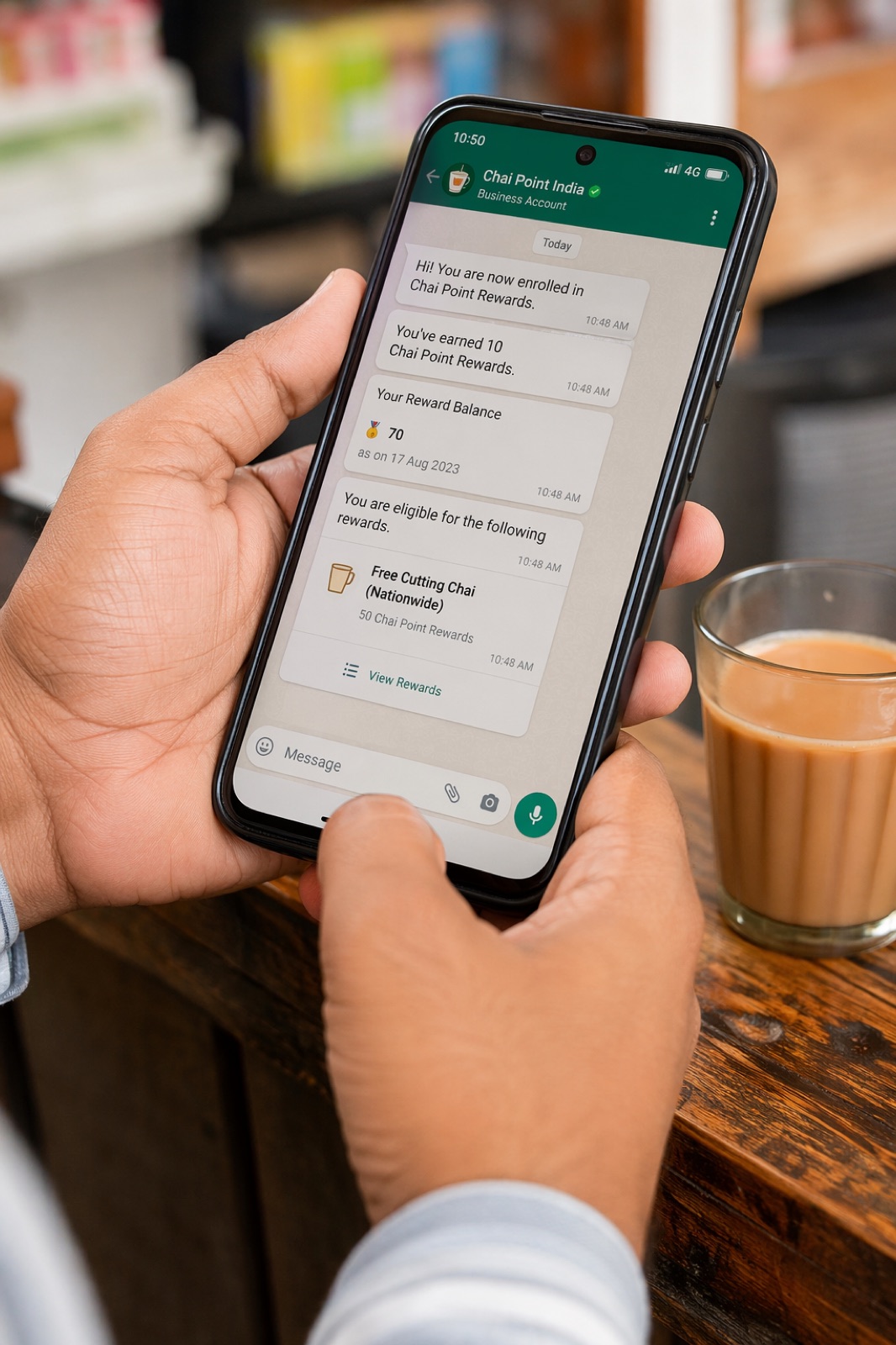
Channel incentives can reach partners through four surfaces: an SDK embedded in the brand's existing app, a white-label standalone app or PWA, WhatsApp, and a web portal. Use an SDK when dealers already use your app for ordering. Use a white-label app or PWA when there is no such app and partners need rich screens such as progress, calculator and invoices. Use WhatsApp for retailers and influencers who will not keep another app. Use a web portal for distributors and accountants working at a desk. The surfaces can run together on one scheme engine, and running two is common.
Separate the engine from the surface first
Most of the confusion in this decision comes from treating the surface as the system. A dealer app, a WhatsApp bot and a portal are all windows. Behind them sits the part that does the work: scheme configuration, the invoice feed, calculation, approvals and the payout ledger. If that engine is sound, adding or changing a surface is a modest decision. If each surface has its own logic, the dealer sees one figure on WhatsApp and another in the app, and trust is gone.
So the first question to put to any vendor or internal team is whether every surface reads from one calculation. On Unotag, one scheme and incentive engine serves dealers, distributors, retailers, influencers, franchisees and field teams, and is delivered as Unotag's own app or PWA, on WhatsApp, as a web portal, or as an SDK inside the brand's existing dealer or retailer app. The dealer scheme engine page covers the calculation side. The rest of this guide is about the windows.
The four surfaces
1. SDK inside your existing app
A module embedded in the dealer or retailer app the brand already runs. The partner sees a schemes section inside a familiar app; the host app continues to handle login, ordering, catalogue and ledger, and orders go to the brand's own order API. Scheme rules live on the server, so scheme changes do not need an app release. The detail is in incentive SDK for an existing mobile app.
2. White-label standalone app or PWA
A separate application in the brand's name and colours. A native app is installed from the app store; a PWA (progressive web app) opens from a link and can be added to the home screen without a store. It offers the full partner experience: progress, "earning now" against "not yet qualified", next targets, calculator, invoices counted, orders, AI explanation in the partner's language and voice. The channel partner incentive app guide lists what it should contain.
3. WhatsApp
A bot on the brand's WhatsApp business number that answers scheme, balance and reward questions, sends target and payout messages, and accepts simple inputs. There is nothing to install and nothing to learn. WhatsApp loyalty programs describes what works in a chat and what does not, and WhatsApp vs app compares member activation on the two, which this page does not repeat.
4. Web portal
A browser login, mostly used on a laptop. It suits the people who reconcile: a distributor's accountant matching credit notes, a large dealer's manager downloading an invoice-wise statement, a franchisee owner reviewing several outlets. It is also the natural home for the brand's own teams.
Comparison
Launch effort is described in relative terms, because actual time depends on the brand's app, data and approvals. How long a launch takes gives a week-by-week view of a program as a whole.
| SDK in existing app | White-label app or PWA | Web portal | ||
|---|---|---|---|---|
| Who it suits | Brands whose dealers already use the company app for ordering or ledger | Brands with no partner app, or with one the trade has abandoned | Retailers, sub-dealers and influencers; any partner unwilling to keep another app | Distributors, large dealers, accountants, franchisee owners, internal teams |
| Launch effort | Depends on the host app's developers and release cycle; one release to embed | A PWA needs no store listing; a native app adds store submission and review | Lowest for the partner; the brand needs a business account and approved message templates | Low; a link and a login |
| Adoption | Inherits the host app's user base; no new install | Has to be earned; each install needs a reason and a demonstration | Highest reach, since the partner already uses it daily | Limited to desk users; rarely opened on a phone at the counter |
| Depth of experience | Full screens within the space the host app allots | Full: progress, calculator, invoices, orders, voice | Shallow by nature: a few lines and buttons per message | Full, with downloads and statements |
| Brand control | Follows the host app's look; the brand owns the surrounding app | Brand name, colours and store listing | Constrained by the chat format and the channel's messaging rules | Brand look, own domain possible |
| Cost drivers | Host app developer time for embedding; platform fee | Platform fee; store accounts and upkeep for a native app | Platform fee plus per-conversation messaging charges set by the channel | Platform fee; little else |
| Main limit | Reaches only partners who have the app, on a version that carries the SDK | A second or first install that partners may not keep | Poor for tables, long invoice lists and anything confidential on a shared phone | Not a counter tool; no notifications by itself |
Decision rules by app maturity
Start from what already exists, because that decides more than preference does.
You have a dealer app that is used for ordering every week
Embed the SDK. A second app would compete with your own. Add WhatsApp for alerts and for partners outside the app.
You have an app, but few partners open it
Do not embed into it and hope. Either fix the reason it is not used, or launch schemes on a PWA and WhatsApp and revisit the app later. An unused app does not become used because a schemes tab was added, unless the schemes tab is the first thing in it worth opening. That can happen, but plan for it deliberately.
You have no partner app
Start with a white-label PWA and WhatsApp together. The PWA avoids store listing and gives the full experience; WhatsApp covers the partners who will not open a link twice.
Your IT team has a dealer app on its roadmap
Do not wait for it. Run schemes on the PWA and WhatsApp now and move the same engine into the new app through the SDK when it exists. Partners keep their history because the engine does not change.
Decision rules by partner type
| Partner type | Primary surface | Second surface | Reason |
|---|---|---|---|
| Distributor or large dealer | Web portal, or SDK in the ordering app | App or PWA for the owner's phone | Reconciliation happens at a desk; the owner wants the headline on his phone |
| Dealer | SDK if an ordering app exists, else white-label app or PWA | WhatsApp for alerts | Several schemes at once need real screens: next targets, calculator, invoices counted |
| Retailer or sub-dealer | PWA for those who want detail | Large base, low patience for installs, simple schemes | |
| Influencer (electrician, plumber, painter, mason) | App or PWA with voice for regular earners | Scan, see balance, get paid; local language and voice matter more than screens | |
| Franchisee | White-label app or PWA, or SDK in the franchise operations app | Web portal for multi-outlet owners | Outlet-level targets and statements |
| Field team | App or PWA | Web portal for managers | Needs dealer-wise distance to target while travelling |
Mixing surfaces on one engine
Running two or three surfaces is normal and not wasteful, provided three conditions hold. First, one calculation: every surface shows the same progress figure at the same moment, because all of them read the same engine. Second, one identity: a dealer who uses the SDK in the morning and WhatsApp in the evening is the same dealer code, with the same history. Third, the same privacy rule everywhere: if earnings are hidden behind a tap in the app, they should not arrive unprompted in a WhatsApp message that anyone at the counter can read.
A common division of labour is this: WhatsApp nudges ("you are close to a target", "your payout is released") and answers quick questions, and the app, SDK or portal holds the detail the nudge points to. The nudge without the detail leaves the dealer with nowhere to check. The detail without the nudge waits to be opened. Because Unotag lets every dealer-facing function be switched on or off centrally or per sales office, the mix can also differ by region: a sales office with strong app use can run the full app, and another can begin with WhatsApp and a handful of functions.
Cost: what actually varies
Platform pricing generally follows usage. Unotag's is ₹30,000 to ₹3 lakh per month by monthly active users, and the pricing page has the bands. What varies by surface is everything around that fee. An SDK costs host-app developer time, which is the brand's own or its app vendor's. A native white-label app carries store accounts and periodic upkeep as phone operating systems change; a PWA largely avoids that. WhatsApp carries messaging charges levied by the channel on business-initiated conversations, which grow with the number of nudges sent. A portal costs the least and reaches the fewest. None of these is large against the scheme budget itself, which is the money paid to partners. A surface that lifts the share of partners who see their next target is worth more than the difference in cost between any two surfaces.
Where each choice goes wrong
- SDK: the host app's vendor is slow or unwilling, and the embedding waits behind other work. Guard against it by starting on PWA or WhatsApp so the scheme is live regardless.
- White-label app: installs are chased as a target and partners delete it within a month. Guard against it by launching in a running scheme, with history loaded.
- WhatsApp: the brand tries to push whole scheme tables through chat. Messages get long, partners stop reading, and the number gets muted. Keep messages to one figure and one action.
- Portal: it is treated as the partner solution. It is a finance and reconciliation tool; the counter needs something on the phone.
- All four: separate systems behind separate surfaces. If figures differ between them, partners believe the lower one and distrust the brand.
Key takeaways
- There are four surfaces, not two: SDK in your own app, white-label app or PWA, WhatsApp, and web portal. They are windows onto one scheme engine.
- If dealers already use your ordering app, embed an SDK. If there is no used app, start with a PWA and WhatsApp together.
- Dealers with several schemes need real screens; retailers and influencers are best reached on WhatsApp; distributors and accountants need a portal.
- Mixing surfaces works when there is one calculation, one identity and one privacy rule across all of them.
Frequently asked questions
White label loyalty app vs SDK: which is better?
Neither is better in general. An SDK is the right choice when partners already use the brand's own app, because it avoids a second install. A white-label app or PWA is right when no such app exists or the existing one is not used. The scheme engine behind both can be identical.
Should we use a dealer app or WhatsApp for schemes?
Usually both. Dealers running several schemes need screens for progress, next targets, a calculator and invoices counted, which WhatsApp cannot show well. WhatsApp is better for alerts, quick balance questions and for retailers and influencers who will not keep an app.
How do you deliver channel incentives to partners who will not install an app?
Through WhatsApp and, for those willing to open a link, a PWA that needs no app-store install. A WhatsApp bot can answer scheme, balance and reward questions and send target and payout messages on the same engine that powers the app.
What is a PWA and how is it different from a white-label app?
A PWA, or progressive web app, opens from a link in the phone's browser and can be added to the home screen without an app store. A native white-label app is installed from the store. Both carry the brand's name and can show the same scheme screens.
Can we run an SDK, WhatsApp and a web portal at the same time?
Yes, and many brands do. It works when all surfaces read from one calculation, a partner has one identity across them, and the same privacy rule applies everywhere, so a dealer never sees two different figures for the same scheme.
Which option is fastest to launch?
A web portal and WhatsApp generally involve the least launch effort, followed by a PWA. A native app adds store submission, and an SDK depends on the host app's release cycle. In every case the invoice feed and dealer master, not the surface, usually set the pace.
Is WhatsApp secure enough for dealer incentive information?
The channel is encrypted, but the phone is shared. Messages sit in a chat that staff or visitors can read. Keep unprompted messages to progress and targets, and show earnings only when the partner asks, in the same way an app keeps them behind a tap.
Do scheme changes need different work on each surface?
No, if all surfaces share one engine. A scheme is configured once on the server, and the app, SDK, WhatsApp bot and portal each display it. Only the wording of WhatsApp message templates may need separate approval from the channel.