Channel loyalty programs: 30 questions, answered briefly
Every conversation with a brand that is considering a program covers the same thirty questions in a different order. This page answers each in a few sentences and points to the guide that goes deeper. If your question is not here, the assistant in the corner of this page will answer it in your language.
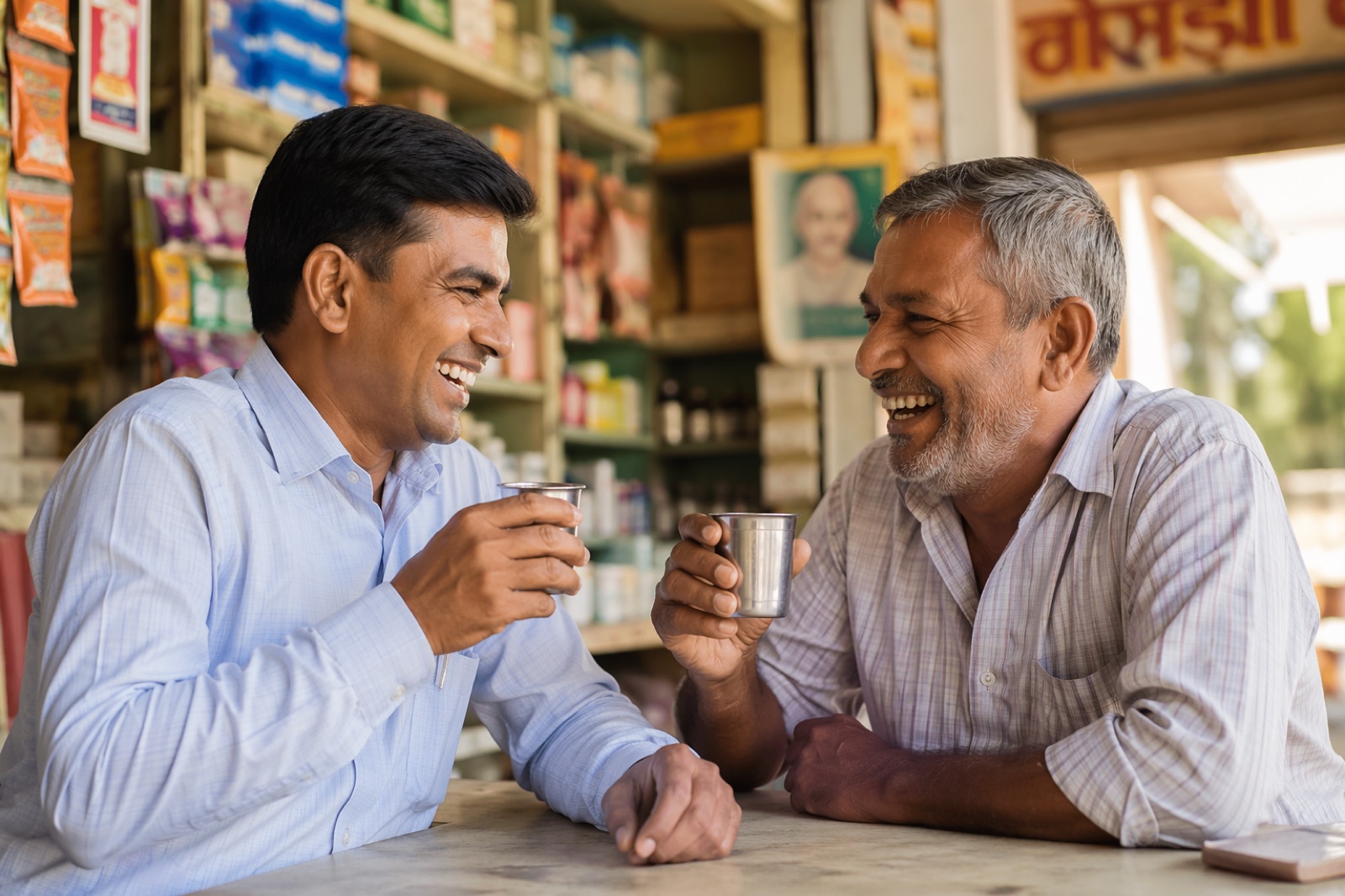
A channel loyalty program rewards the distributors, dealers, retailers and trade influencers who sell, recommend and install a manufacturer's product, using evidence such as QR scans or invoices to credit points, cash or gifts. In India a typical program costs 1 to 3 percent of channel revenue in rewards plus a platform subscription of ₹30,000 to ₹3 lakh a month, launches in two to twelve weeks depending on whether QR codes must be printed, and is judged on activation, monthly active members, redemption and incremental sales against a control group.
How to use this page
The thirty questions are grouped under basics, cost, design, technology, fraud and tax, and measurement. Each answer stands on its own; each links to the full guide. The glossary defines the terms.
Basics
Questions 1 to 6 cover what a channel loyalty program is, how it differs from a trade scheme and a consumer program, who it is for and what it needs to exist.
Cost and timing
Questions 7 to 12 cover reward budgets, platform pricing, QR printing cost, launch timelines and whether to build or buy.
Design
Questions 13 to 18 cover which tier to enrol, earn rates, cash versus gifts, expiry, languages and communication.
Technology
Questions 19 to 22 cover QR codes, WhatsApp versus apps, ERP integration and AI.
Fraud and tax
Questions 23 to 26 cover bulk scanning, fake bills, Section 194R and GST.
Measurement
Questions 27 to 30 cover the metrics, benchmarks, ROI and what to do when a program stalls.
Key takeaways
- A channel loyalty program is the permanent rail for member identity, ledger and payouts; schemes run on top of it.
- Budget 1–3% of channel revenue for rewards plus a platform subscription by active members.
- Launch in two to six weeks without QR codes, six to twelve with.
- Judge it on activation, monthly active, redemption and incremental sales against a control group.
Frequently asked questions
1. What is a channel loyalty program?
A permanent program that rewards the distributors, dealers, retailers and trade influencers in a manufacturer's channel for selling, recommending and installing its products, with member identity, a ledger and payout rails that schemes run on top of. Full guide: what is a channel loyalty program.
2. How is it different from a trade scheme?
A scheme is time-bound with a target and an end date; a loyalty program is the ongoing rail beneath it. Brands that run only schemes rebuild the infrastructure every quarter. See incentives vs loyalty.
3. How is it different from a consumer loyalty program?
Consumer programs reward shoppers; channel programs reward the trade that sells and installs. The members, evidence, payout rails and tax treatment are all different. See channel vs retailer loyalty.
4. Which industries run channel loyalty programs in India?
Paints, pipes, wires, switches, cement, plywood, tiles, sanitaryware, batteries, lubricants, fans and appliances, solar, agri inputs, FMCG and pharma. See the industries pages.
5. Who is a trade influencer?
A professional who chooses or recommends the product at the point of use without buying it: electricians, plumbers, painters, masons, carpenters, mechanics, installers. See rewards for trade influencers.
6. What does a program need to exist?
A member master with KYC, evidence of earning (scans or invoices), a ledger, payout rails, tax handling and a support channel in the member's language. See how to implement.
7. How much should the reward budget be?
Typically 1 to 3 percent of channel revenue across tiers; above 5 percent usually funds a price war. See budget planning.
8. What does the platform cost?
A monthly subscription by active members, roughly ₹30,000 to ₹3 lakh a month. See pricing and the cost calculator.
9. What do QR codes cost to print?
A packaging cost that depends on print method and volume; the QR cost estimator models it. See QR program cost.
10. How long does launch take?
Two to six weeks for invoice-based programs, six to twelve when QR codes are printed into packaging. See launch timeline.
11. Should we build our own platform?
Usually not; the app is under a fifth of the system. Build when loyalty is your product or you have a standing engineering team. See build vs buy.
12. How do we choose a vendor?
Ask for live demonstrations of payouts, 194R handling, fraud rules and regional-language support, and check the head-to-heads. See vendor selection and platform roundup.
13. Which tier should we enrol first?
The one that makes the decision: influencers for installed products, retailers for counter products, dealers for volume and range. See which tier to enrol.
14. How many points per rupee?
Set reward value at 1 to 3 percent of purchase first, then use 1 point = ₹1 or ₹0.10. See earn rate design.
15. Cash, points or gifts?
Cash by UPI redeems best and avoids blocked GST credit; gifts motivate at milestones. Most programs pay cash for the bulk and gifts selectively. See cash vs points vs gifts.
16. Should points expire?
Yes, usually after 12 months, communicated at issuance and before expiry, to bound the liability. See points liability.
17. Which languages do we need?
Hindi plus the state languages of your footprint, with voice. See multilingual programs.
18. How often should we message members?
A monthly scheme message plus service replies to every scan; weekly marketing broadcasts get muted. See communication plan.
19. Do we need QR codes?
For influencer programs, yes: the in-pack scan is the only evidence the installer touched the unit. Dealer programs can run on invoices. See scan vs invoice.
20. WhatsApp or an app?
WhatsApp-first for activation, an app for bulk scanning and catalogue depth, both on one ledger. See WhatsApp vs app.
21. Does it integrate with SAP or Tally?
Yes: member master and invoices in, settlements out, starting with nightly files and moving to IDoc, Event Mesh or Tally XML. See ERP integration.
22. What does AI actually do?
Multilingual voice support, scheme simulation, fraud pattern detection, image authentication and measured nudges. See AI in channel loyalty.
23. How do we stop dealers scanning everything?
In-pack codes only the installer reaches, velocity and geography rules, and dealer bulk-scan detection with a review queue. See QR fraud prevention.
24. How do we stop fake bills?
Duplicate detection across uploads, GSTIN validation, related-party checks and caps. See fraud prevention.
25. What is Section 194R?
10 percent TDS on benefits above ₹20,000 a year to a resident in business, in cash or kind, aggregated across the year. See the 194R guide.
26. How does GST treat rewards?
Gifts carry blocked input credit; target payouts are usually commercial credit notes; dealer services are taxable supplies. See GST on rewards.
27. Which metrics matter?
Activation, monthly active, scan frequency, redemption, breakage and incremental sales against a control group. See KPIs.
28. What numbers are normal?
Activation 40–60%, monthly active 25–45%, redemption 60–85% for UPI programs, breakage 15–40%. See benchmarks.
29. How do we calculate ROI?
Incremental gross margin from the treated group over a control group, less rewards, platform and operations. See ROI calculation and the ROI calculator.
30. Our program has stalled. What now?
Check enrolment quality, reward value, payout speed and communication cadence in that order; most stalls are one of the four. See reviving a failing program.